
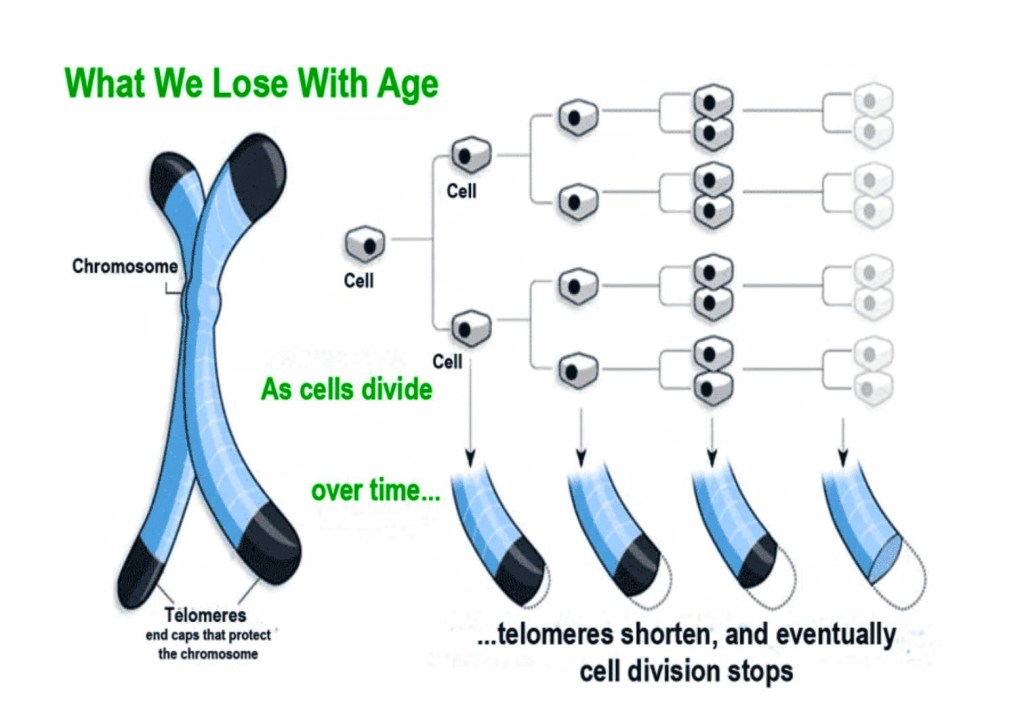
For mice, the number is about 15; humans: 50; and Galapagos turtles: 110.
———————————-
If turtles and lobsters could talk they would turn first-person accounts into fascinating history lessons.
Imagine you are a doddering old turtle off Caen, in Northern France, scoping the shallows for algae, sponges or whatever the fuck turtles eat. Chances are good that in 1588, as a kid swimming alongside your mommy, you watched Sir Francis Drake on his man-o-war, The Revenge, racing with the wind, chasing after the Spanish Armada.
Turtles habitually live a healthy 400-plus years. Lobsters and jellyfish live even longer, almost forever. So, imagine you’re a lobster instead and it is 43AD. Instead of Sir Francis and the Spanish Armada, you might actually have seen traffic in the opposite direction – Roman Emperor Claudius’s fleet spread out horizon to horizon, two-tiered arrays of oars rising and falling, chopping up the waters as the galleys crossed over to vanquish the incumbent, barbarian war-lord Caractacus and annexing Britain.
The sea creatures referred above possess negligible senescence – senescence being the scientific term for ageing. They don’t seem to age at all.
Most of us dream of longevity. Some among us are conducting advanced research on immortality. The question on our collective minds is a simple one – Why can’t we be like lobsters or turtles or those giant sequoias and live hundreds of years without growing old and infirm?
Getting old seems like a fact of life. It is a gradual process of wearing out, inevitable for both man-made machines as well as the biological machinery ticking away inside us. However, looking around the animal and plant kingdom, we can see that there is no universal law of biology that mandates ageing.
So, like the intelligent, questioning beings that we are, we have concluded that the above creatures must have something in their biology that we do not. The search is on, into finding and replicating that something.
—————————-
Ageing is the single largest cause of human suffering. It might sound counter-intuitive, but it makes sense when you think it through : all of the biggest killers in the modern world, from cancer to heart disease to dementia, affect older people far more often than younger ones. Take Covid-19 as an example. The oldest patients were hundreds of times more likely to die of the disease than children or young adults.
If you add it all up, of the 150,000 deaths that happen every day on Earth, over 100,000 of them are caused by ageing. Deaths from problems like heart disease are preceded by years of physical decline, loss of independence and so on.
And then there’s the problems we don’t list as diseases: the frailty, the forgetfulness, the incontinence… Add all this suffering together, across billions of people, and nothing else comes close.
So, rather than tackle these individual problems one at a time, why not go after the real prize : arresting the ageing process that causes them?
———————————
Longevity used to be a fantasy until 1961, when a young researcher at the UCSF School of Medicine, Leonard Hayflick, found out the exact reason why we don’t live longer.
For his research, Hayflick contracted with nearby abortion clinics to deliver dead fetuses to him, from which he extracted cells. He chose fetuses because their cells were pristine and the least likely to have viruses in them which might blur the study results.
Hayflick found that the cells from his fetal tissue samples multiplied only a finite number of times, before they stopped dividing altogether. Each time a cell undergoes the multiplication (known as mitosis), the telomeres (microscopic genetic features on the ends of each chromosome) shorten slightly. Cell division will cease once telomeres shorten to a critical length.
Hayflick interpreted his discovery to be aging at the cellular level.
Now a well-established fact, the number of cell divisions in the case of humans is 50, while for lobsters and turtles it is far higher.
Hayflick propounded that, if the gene that limits the number of cell divisions can be isolated and modified, then that 50-division limit can be extended, enabling humans to live longer.
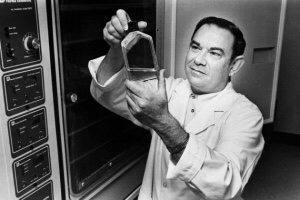
Hayflick made another even more remarkable discovery – that if a human cell is frozen below -250˚C after it has already gone through a number of divisions (say, 25), the divisions slow down and as soon as the temperature is raised once again, the multiplication begins where it left off.
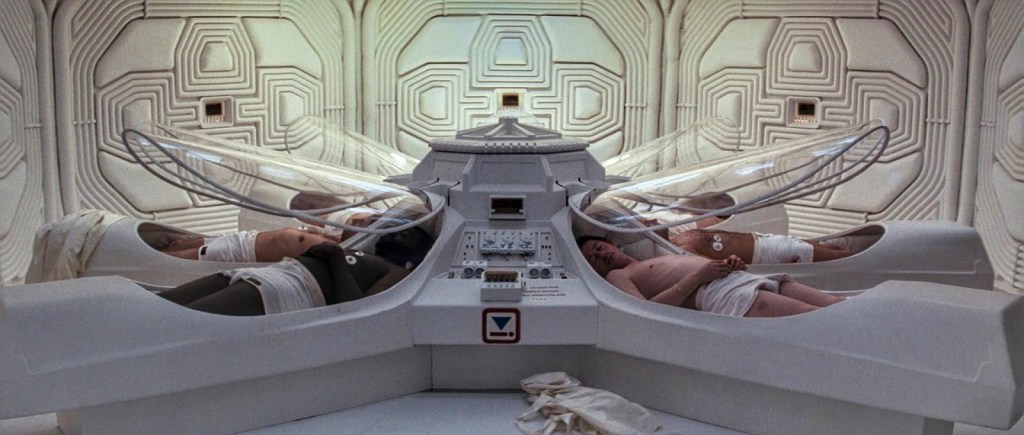
In fact, if you increase or decrease the cell temperature with a regulator, you can speed up or slow down the division. Surviving inter-planetary travel through deep freezes is not merely science fiction, but a reality waiting to happen.
————————-
Scientists now refer to that limiting number of cell divisions as the Hayflick limit.
Who or What was responsible for fixing the Hayflick Limit at 50 for humans? God? But if that were so, if God really did decide that human cells should stop at 50 divisions, surely He must have wanted the number to remain sacrosanct. Why then did He give us the ability to figure out how to extend it beyond 50?
But I stopped understanding God a while back. He’s the same guy who gave us a richard and a hard-on and then turned around and then laid down the rules on who, when and how to fuck.
The one thing that definitely is not fixed is our ideas and questions. They seem to grow with every new scientific revelation, drawing us further and further away from the fantasy concept of God. We are already at a stage where Adam and Eve and the serpent and the apple and the jet setting Angel Gabriel have begun to seem absurd.
We are now living through an era when we won’t even get a ticket for breaking nine out of the Ten Commandments. Go ahead and check the penal codes of most modern nations if you don’t believe me.
——————————-
Ultimately, aging is a disease – a disease that many top scientists believe can be slowed, stopped, and perhaps even reversed.
Researcher Andrew Steele, in his “Ageless: The New Science Of Getting Older Without Getting Old”, says that the progress in research on arresting senescence is rapid and it is a matter of time before humans will be able to extend life expectancy dramatically.
The search for that elixir which gives eternal life is a frenetic one, its intensity in direct proportion to the number of billionaires in the world.
As I write this, a bunch of billionaires are funding research on agelessness like there’s no tomorrow. Jeff Bezos backs Altos Labs, while Sam Altman funds Retro Bio. Google’s Larry Page is all in with Calico.
The reasons why billionaires are throwing money at longevity research are straightforward. First, they sincerely believe that they are capable of achieving anything with their single-mindedness. To them, obstacles are temporary, fleeting challenges to be swiftly overcome (or bypassed). Second, they can’t take their money with them when they die.
The third reason is the most important one. Longevity is a huge business opportunity, just as obesity and weight loss became when ozempic was born. A joint 2013 study by the London Business School, Oxford and Harvard concluded that extending just one healthy year of life is worth $38 trillion to the global economy and extending healthy life by 10 years could net greater than $300 trillion.
No other business opportunity even comes close.
——————————
Immortality though has its pros and cons. Among the pros is the exhilarating feeling that you are never going to die. In 3 billion years you’ll watch the Sun bloat so large and red that you could actually reach out and touch it. You would of course be burnt to a crisp but let’s hope immortality brings with it the guarantee of a life free of pain.
A trillion years and you would be part of a dimensionless dot, the universe having collapsed back into a singularity.
And the cons – immortality will give you a cast iron immune system but it won’t save you from accidental harm, like if you step off the sidewalk and get run over by a drunk driver or get crushed under an industrial press like the Terminator. So, whether you are immortal or not, you still have to try not to be a schmuck.
I’ll be 70 in eight months. According to the Canadian Census Bureau, I am expected to live another 13.1 years. With my spartan lifestyle and frequent sex, it could even be twennie years. (They say sex increases life expectancy). That is enough time for the Human Genome Project, stem cell research and nanotechnology to detect my Alzheimer’s or blocked heart valve early and prevent it.
So I am going to keep on eating berries and nuts, drinking wine and fucking excessively.
Amen.
 Spunkypedia