Spunkypedia

~ – There’s always something to write about

Spunkypedia

Author Archives: spunkybong

Turning the Corner

25 Friday Dec 2020

Posted by spunkybong in Uncategorized

≈ Leave a comment

“To get lost …..is to find the way…” – old Zulu proverb

The wind picked up, making the sidewalk litter tumble along. The digital clock on the cash counter of Cafe Falafel said 4:00 AM.

This part of downtown Montreal is called “The Main” – Blvd St. Laurent, the heart of the heart of downtown – littered and filthy, but exhilarating and lively.

No one sleeps on The Main.

I remember every millisecond of the night of the 2nd February, like it happened yesterday……….

Slung high up on the rear wall of the cafe was a large flat screen TV that was on, 24/7. It had a weather bubble in a corner that said “-27°C / -42°C”, which meant that although it actually was -27, it ‘felt’ more like -42, a concept called “windchill”. (The windier it is, the lower is the perceived temperature). If you were to be outside the plate glass right now, your body would experience all the effects of a -42° ambient, like frostbite, hypothermia, etc. You’d have 30 minutes with adequate clothing and 30 seconds without.

—————————

After a while, the litter settled back and there was a brief lull before the wind picked up again and the sidewalk outside turned white with those tiny balls of ice. Beyond the glass, it was now just a white swirl. The pole with the placard right outside the front entrance, that read Autobus-51(Des Pins-Atwater), was now barely visible.

“Wish I could split”, I said out loud, to the TV on the wall. Of course, I couldn’t. I worked here and tonight my nightshift partner, a 19-year old Salvadoran student named Hector, hadn’t turned up. I was by myself, manning the joint alone. Earlier Ben, the owner, had made noises about coming over and giving me a hand but it was the middle of the week and there was no rush.

No, I couldn’t split. The money we had brought with us had run out and I needed this job, any job. Once again, I questioned the decision to migrate so late in life. Coming from a land where status was important, the sudden fall in my status here filled me with a certain despair, but then I thought of Hector and the others working at the cafe, PhDs waiting for a call from McGill, doctors trying to qualify to be able to practice, software engineers, dentists, all working to stay alive while aiming to settle in their professions. The graveyard shift, 10 to 6, was the only one possible, what with the Immigration Quebec’s French course running till 9.15.

————————————

My eyes fell on those yummy falafels under the counter. I took two out, heated them in the microwave, slapped a dollop of humus on the side and sat down in a corner with a plastic fork.

It was now 4.30am. The drunks had staggered in after the bars had closed, gorged and long gone. The drug-addled fences trying to hawk GPSs and cameras to those drunks were gone too. This was the downest part of downtown. Any downer and you might poke through into China. You could get anything you wanted here at a price.

The slick, sharp suited gents were always the last to arrive, sometimes with flashily dressed women. They would sit in the shadows in the corner and speak in whispers, at times bursting out in laughter. A couple of them invariably pealed off and took another table, closer to the door. Ben had pointed them out earlier, whispering, “Rizzutos…” and told me to make sure they had whatever they wanted, it was all on the house. It didn’t bother me none. They treated me with a kind of old fashioned respect and thanked me whenever I set the tables for ‘em.

What I loved the most about those thugs was their show of respect, their seeming readiness to pay. At the end of the meal they always asked politely for the bill and when I shook my head and said,”It is a pleasure”, they would thank me. They knew I was just a waiter, I was nothing but a piece of say, lint, or a doorknob or some other inane, valueless object to them but they never took anyone for granted. It was this gesture, this little pantomime that I appreciated.

One time some drunks were crowding me at the till, getting belligerent, making me real jittery, when one of the two goons by the door came over and led the bunch out the door, wordlessly and sat back on his seat, giving me a nod.

Maybe Ben passed them weekly packets of cash, I don’t know. If these were indeed members of the Rizzuto clan, then I can confirm I have actually met members of the Bonnano Crime Family of New York. Wow.

————————

Nearing closing time, an elderly woman in a smart dress came in with a scrawny homeless guy in tow. She held out a fifty and said,” Please, can you prepare a full plate for this man here? I found him sitting outside the metro. I have to rush, thanks. And do let him stay in here until that blows over.” She pointed toward the now full blown blizzard outside, flashed a smile and made an immediate exit.

Soon as the lady left, the guy stepped forward and said, “I don’t want no chow, man, just gimme the dough she gave you, okay?”

“No skin off my back,” I said to the guy and I passed the fifty back to him and he shuffled out. I rose and locked the front entrance doors after him and made myself a coffee.

We always locked up after 4.30am for security reasons. The restaurant would still be open for business, but you would have to pass my scrutiny, to be able to enter. This was an all-night joint in a scary part of town, closing only from 6am to 7am for a thorough clean-up, which meant doing the dishes, cleaning, sweeping, mopping and cleaning out the toilets (you should have seen the state that the drunks left the toilets in). With Hector absent, all this would be accomplished by yours truly in the morning before I closed up and left.

I was sitting well back in the shadows of a recess next to the cash register and as I sipped from my mug a wave of melancholy swept over me. Last week, we had been forced to down-size to a tiny one-room cubbyhole. When you folded down the bed, your nose bumped against the kitchen counter. On Fridays, our neighbors, a Pakistani family, cooked biryani. Fridays smelt good. Better than the tinned stuff we opened day after day.

Everything pointed to only one thing – this mad adventure known as migration had probably failed. Land of opportunity my ass. Was this it? Was this going to be the way the rest of my life would slip by? Was that cubbyhole going to be home from now?

—————————

I must have dozed off, I don’t know for how long. But as I sat in the shadows, my eyes began to notice this hooded form of a person. He was leaning against the locked glass doors, while around him the blizzard had turned into raw mayhem.

The figure outside the glass was rocking back and forth. I couldn’t trust my eyes but he appeared to be in just a T-shirt. Hands outstretched, he was trying to tap on the glass and steady himself at the same time, against the howling wind. The moment I started toward the door, a voice inside me began telling me I was being a schmuck. This could be a hold-up and I shouldn’t be opening the door to this creep. I should be calling 911 instead. There must have been more than two grand in the till. On The Main, restaurant servers got shot for much less.

As I approached the door, a sudden gust sent the man sprawling on the sidewalk. His cap went flying and his hood came off and a mass of auburn hair cascaded out. It was not a he, it was a she and as she lurched back up to the glass, I noted that she had only socks on.

Scrambling desperately I unlocked the doors and they swung open with such force that I was knocked clean off my feet. I got up, ran across and helped her in from the blizzard. And then, pushing my whole weight against the doors, I slammed them shut.

She was cold, real cold and as I held her, she shivered uncontrollably. I sat her down and brought in the spare hooded parka from the employees’ closet and draped it round her. She smelt awful but I somehow managed to hold her tight allowing her body to get warm. Gradually the shivering passed.

I moved her to a corner table and reached for the phone, “I’ll call 911, hang on” and the next thing I knew, she had her hand clamped tightly over my wrist. “No, please,” she whispered. That was when I noticed the multiple puncture marks running down the sides of both her arms.

“OK, relax, take it easy, are you hungry?” She nodded and after a while, I had a nice heaped plate of shish tauk, humus, fries and salad laid out in front of her. And a steaming glass of coffee. As she wolfed the food down, I couldn’t help noticing how pretty she was. She couldn’t have been more than 14, maybe 15. The eyes guileless, the bluest I’d seen. The hair, all messed up. Auburn- brown.

The hood of my parka encased an angel.

When she was done eating, she looked much better. “I don’t have any….cash”, she said, “but if you want…we can…I can…you know…I’m good, really good.”

I tried not to show the consternation I felt, at what I’d just heard. I simply shook my head. “It’s on the house, relax. Try to get some sleep” is all that I could manage. She laid her head on the table surface and was out like a light in no time. I balled up a couple of clean aprons, lifted her sleeping head gently and slipped the makeshift pillow under.

——————-

It was just past six and I was cleaning the serving counters and getting ready to close up and go home, when the girl stirred. She padded up to me in her socks and kissed me on my grey bearded cheek. Even though she smelt yucky as hell, it was hard for me not to smile.

“Can I use the loo?”

“Sure, it’s that way, to your right”, I nodded toward the back. I hoped she would be done and ready to move out soon. Ben, the owner, would be in any minute, to start the daily ritual of getting the restaurant ready for the first customers. I didn’t want to have a lot of explaining to do.

She didn’t take long and I couldn’t help stealing a glance when she emerged from the washroom. The grubby face was creamy and radiant now, the curls luxurious and the eyes the most beautiful I had seen in a while. If I had the means I would adopt you, I thought.

She didn’t mind waiting as I closed up and soon we were both on the sidewalk. The wind had subsided, but it was still bitterly cold. She looked comical, a pixie, in the large shaggy parka and those huge old snow boots an ex-employee had left behind a long time back and never returned to collect. In one hand, she held a brown paper bag filled with shish tauk and fries that I had prepared for her to take along. In the other, she clutched a 5 dollar bill I’d given her.

We stood there, at the bus stop, not saying a word. After a while, the 51 came up Des Pins, grunted to a stop and the doors sighed open. She was about to get in, when she hesitated, as if she wanted to say something. Then she turned and with a brief wave, disappeared into the bus.

I stepped off the curb to cross over to the metro entrance and as I did, I caught one last glimpse of the bus as it turned the corner. And I wondered, if she would turn hers.

I hoped I would turn mine. Some day soon.

———————————

Cafe Falafel closed its doors sometime around 2010.

Share this:

  • Share on X (Opens in new window) X
  • Share on WhatsApp (Opens in new window) WhatsApp
  • Share on Facebook (Opens in new window) Facebook
  • Email a link to a friend (Opens in new window) Email
  • Print (Opens in new window) Print
  • Share on Tumblr (Opens in new window) Tumblr
  • Share on Reddit (Opens in new window) Reddit
  • Share on Pinterest (Opens in new window) Pinterest
  • Share on LinkedIn (Opens in new window) LinkedIn
Like Loading...

Is that you, darling, are you home?

14 Monday Dec 2020

Posted by spunkybong in Uncategorized

≈ Leave a comment

It’s five and already there’s a chill in the air. The ANRAD building is still humming with activity, but for you there is not going to be any more late evening meetings. No one is going to be calling you up.

You rise and drape the Kanuk overcoat over your shoulders and step outside, closing the door of your tiny office behind you. The corridor is swarming with eager young faces rushing about, files and folders in hand, balancing cell phones with their chins. You make your way to the bank of elevators and wait. Unlike the executive elevator which you once rode non-stop down to the reserved parking every day, this one stops at each floor before it opens up finally in the lobby, 60 floors down. That’s okay by you.

You step inside the elevator and as you shrink back into a corner your thoughts go to your house. It seems a bit too large now. Something smaller in Pointe Claire by the river should do just fine. A cottage with a couple of extra rooms for Arnav and Tina and the kids, when they visit. “I’ll call the Remax lady first thing tomorrow,” you resolve in your mind as you stare at the floor numbers tumble.

As the elevator stops at each floor and the crowd ebbs and flows, your gaze falls on the logo over the door. It says ‘ANRAD – Always building strength- in your defense’. The words are spread over a jagged imprint of a single lightning bolt. You’re transported back to the first time you saw the logo. Your first day at work and how it had all begun, a long time ago.

———————

First there was the adrenalin rush of the final interview and then the euphoria of the call from someone called Kristie ‘suggesting’ that the CEO would like you to join the team. That you’ve been shortlisted to spearhead a new initiative. To develop a game-changing new recoilless pulse rifle from green field to commercial production.

And finally, the lunch with the CEO in one of those exclusive golf clubs. Rear Admiral Patrick H. Hansen(Retd.), is a great one at massaging egos. He makes you feel like only you could have filled that job opening. Like as if they’d been searching all over for someone just like you and then you appeared and accepted the job through some divine intervention.

“You can call me Pat,” says Hansen, arms widespread and a broad smile, as he guides you to a sofa and leans back into the cushions right opposite. He makes it sound like it’s a done deal. You feel like the keys to the kingdom have just been bestowed upon you. Hansen is a real smooth talker. Relocation expenses, no problem, the sky is too limiting.

“Kristie has briefed you on the joining bonus, yes? Let me know if it meets your expectations. We can always work around it if necessary,” he’s patting down the icing now, “A suite is reserved for you and your family at the Queen Elizabeth. Till you find a home. I’d suggest Westmount. Bill and Doug have their cottages there. Peaceful and quiet but still a stone’s throw from downtown. The Sacred Heart Convent is practically next door. Our Annie went there. I’ll get Kristie to have a word with the principal, Gwen Arnold, no problem.”

He is referring to the exclusive $39000 tuition per year girls’ school for your daughter, Tina. North American senior executives get personal real fast. If they sound like that law firm in the John Grisham thriller The Firm, believe me, they actually are that intrusive at the higher levels. They’ll open up their homes to you, have their kids play with yours, insist on driving you to Sunday golf. Insist that you address them by their first names. At the weekend charity gala, his wife will ensure your wife and she have matching outfits. You’ll be ‘family’.

Pat Hansen knows all about you, every wart, make no mistake of it. And so do you, about him. You’ve taken the time to do some research of your own on your future boss. American, heavily built, ex-Navy aviator, he drove F4s for six years in the 60s. Approximately 240 sorties from the 93000ton Kitty Hawk, Carrier Task Force-3, 7th fleet, Gulf of Tonkin 1963-68. Legion of Merit and DFC awardee, twice recommended for the Medal of Honor.

The Medal of Honor recommendations were for conspicuous display of extraordinary bravery. That those recommendations didn’t actually result in an award had nothing to do with his sense of valor, sacrifice or patriotism and everything to do with politics at the Pentagon. His abrasive demeanor did him in. Once, in a meeting presided by the Chairman, Joint Chiefs of Staff, Hansen, then just a Lt. Commander, told a four-star general to go f–k his mother no less than five times. That he was never courtmartialed speaks for the respect he commanded over the rank and file.

One of the two MOH recommendations came from an incident where Hansen risked his life to save an A-10 pilot on the Kitty Hawk. The crippled Warthog was making an attempt to touch down on the heaving carrier deck in pitch darkness and very choppy seas. The pilot tried his best but made a mess of it. The jet weaved in drunkenly at 150knots, hit something on the deck, turned turtle, hurtling and skidding to a halt, precariously close to the edge, 200ft above the churning waters.

As the massive carrier pitched and yawed in the swells, the Warthog slowly slipped and slid toward the tipping point. Meanwhile, jet fuel gushed from the ruptured wing tanks and slowly spread over the carrier deck as flames began to sizzle up from somewhere behind the cockpit.

Lieut Commander Pat Hansen of the 25th Pathfinder Squadron, stepped out of the shelter of the rear 12inch gun turrets and walked briskly to the upturned jet, unmindful of his boots sloshing through the spreading jet fuel. He had a crowbar in his hand. He smashed a hole in the already cracked canopy and yanked the pilot, a Capt Joe Schwartz, from the cockpit. Capt Schwartz reported later that as he was being pulled out, Hansen looked at him and said in mock severity, “What the f—‘s takin’ you so long, Schwarz, there’s turkey for dinner, f’Christ’s sakes. Now go clean up and get yore ass to the mess hall on the double.”

The Warthog exploded as they reached the base of the flag bridge.

Retiring from the navy, now a Rear Admiral, Hansen joined the private sector and he’s been kicking asses since. A ruthless administrator, he doesn’t take ‘no’ for an answer. And right now, he isn’t done yet.

“We want you to be at home, feel comfortable, grow old with us. What’s your wife’s name again? Rani, what a charming name. And don’t forget to call Kristie, if you need anything at all”. The icing is a bit overdone but you’re not complaining. And he still isn’t done yet.

He leans back, his arms raised, elbows bent, hands joined, pudgy fingers locked behind, supporting the bullet head. “After you set this thing up and get it going, Arch (he’s already anglicized your name, from Arjun), I want you to go down and expand our Indian operations. India is where the future is. I believe it. The board believes it. We’ve got to get in there and now.” He settles back on the cushions. It looks like he’s finally done.

“Another brandy before we part? You must be tired”. You know a dismissal when you see one. You make polite noises and take your leave.

You catch a cab and come home in a daze. You’ve just signed up to join one of the world’s largest defense contractors. You look at the rusty 10yr old Mazda3 in your driveway. It has served you well but now it’ll have to go. ANRAD Vice Presidents are given fully loaded Cadillac Escalades by the company and you’ll have one too. Plus, a luxury sedan can be had for your wife, with a generous loan, advanced at zero percent payable over 15 years. You make a mental note to check out the Jaguar dealership sometime this week. It’s all unreal and suddenly happening very fast.

Soon as you are through the front door, Rani rushes up and springs into your arms. Like you, she’s beside herself. She keeps hugging and kissing you and cooing and gurgling, “I love you so, darling. Congratulations! I knew you’d make it!” she whispers.

You gaze at Rani. She’s beautiful. Has been, ever since you first spotted her at a ‘bhaiphota’ at your friend, Shibu’s house in Siuri. When you married her, it had to be a simple registered marriage as you couldn’t afford a fancy ceremony. And besides, her prosperous parents had refused to attend since you were a Kayastha and she a Brahmin.

The first home you two moved into, with your worldly possessions inside a weather-beaten suitcase, had been a tiny one-room apartment that Rani had tastefully furnished, with the little things that you could manage to buy. And when you used to come home from work, you’d find Rani on her haunches, leaning over the coal burning chullah, flipping phulko rotis (Bengali nan bread) for dinner, her soft hands singed repeatedly by the flying embers.

Hearing the front door open, she’d look up with unconcealed delight and call out, “Is that you, darling, are you home?” You’d step forward and try to take her hands in yours but she’d hide them behind her back. You’d reach around her, puzzled, find them and lift them up to kiss them. It’s then that you’d notice the tiny burn marks from the stove.

The years have flown fairly quickly after that. After moving to the west, Rani and you had one more child, a son, Arnav. He is going to Stanford since last August. Tina lives with her husband Dieter, in Schwedt. They have a cottage by the Elbe.

And Rani. It’s now a year since the very light of your life, your Rani, passed away, consumed by the cancer which had galloped unchecked through her thyroids.

———————-

And now back to you. The new product line was a huge success. It’s now one of the main revenue earners. The Indian stint saw ANRAD blossom into a major player in India, employing over 3000 engineers and staff. You’re still with ANRAD, though not in the ‘Penthouse’ any more. A few months after Rani was gone, it began to show.

They would never let you go. You had been a pillar, a star. You were ANRAD history. You were an ANRAD institution. Like in the case of Steve Wozniak, who keeps receiving a stipend from Apple, there is a tacit understanding that you will be there, drawing a salary, till the day you by yourself choose to leave.

You finally got gently eased out and moved into a tiny office four floors down. VP-Communications Strategy is what the plaque on your office reads. You have your own fresh-faced, temporary intern for an assistant. All your personal volumes and knick-knacks have had to be carted home as there’s no space inside your new office. You have only one photo standing on your desk. A tiny framed picture of Rani, a baby Arnav in her arms, with Tina standing by, clutching her sari and leaning against the Mazda3.

And Pat Hansen? The Rear Admiral had made landing on pitching carrier decks an art. But last summer, one balmy Sunday, his personal Embraer Phenom-100 cartwheeled and blew up in the middle of the Teterboro strip as he was coming in to land. He was killed instantly. The accident is still being investigated.

The elevator sighs to a final stop in the lobby. You jerk back from your little reverie, straighten and walk slowly out, buttoning your coat as you approach the plate glass doors leading to the sprawling basement parking lot. It seems an effort today, you don’t know why. Home and a shower is what I need, you say to yourself. A ‘geeta path’ (group reading of holy Hindu scriptures) is organized at Shankar Mullicks’, later in the evening. Today is Janmashtami, the day Lord Krishna was born. And Shankar’s wife, Sumona, won’t let you leave without eating, afterwards.

The walk to your tidy little BMW hatchback is an unusually long one today. You regret your habit of parking it way behind, in that dark secluded corner next to the emergency exit. As you walk, the rows and rows of cars seem endless. You never realized how huge this place really is.

You can see the car now. The silver grey seems to stand out, even in the gloom. You’re tired and you decide to rest for just a while on the bonnet of the Buick standing a few cars away. The Buick has been standing there for the past few days, it’s owner, Bill Mullholand, being gone on an overseas sales trip.

As you lean against the bonnet and try to turn your head, you keel over slowly and spill onto the garage floor, your head coming to rest next to the Buick’s front tyre. You gaze up through the mist and then you hear it clearly – a voice you’ve heard a million times before, a voice you’d come to love more than yourself…….

“Is that you, darling, are you home?”

Share this:

  • Share on X (Opens in new window) X
  • Share on WhatsApp (Opens in new window) WhatsApp
  • Share on Facebook (Opens in new window) Facebook
  • Email a link to a friend (Opens in new window) Email
  • Print (Opens in new window) Print
  • Share on Tumblr (Opens in new window) Tumblr
  • Share on Reddit (Opens in new window) Reddit
  • Share on Pinterest (Opens in new window) Pinterest
  • Share on LinkedIn (Opens in new window) LinkedIn
Like Loading...

Check-up

13 Sunday Dec 2020

Posted by spunkybong in Uncategorized

≈ 1 Comment

At 9.45am, the waiting hall at the Brunswick Family Clinic was filling up quick.

I was here for my annual check-up. The tests were done and I was waiting to see the doc. Everything seemed in prefect order. Various body parts humming along normally. Like the PW800 turbofan. If you’re getting a business jet, insist on Pratt and Whitney engines. The other guys distribute bibles free, with their engines.

There was an old couple sitting across, a low hum of conversation coming from their direction…”Did you hear from Caroline?”…..”No, she hasn’t written in years, ever since she moved to Burnaby. I wrote about my prostrate. She never replied.”….

A plump black woman brought in a stroller and, from it she picked up a frail child, a curly haired white girl. She deposited the kid gently right next to me and sat down next to her on the other side.

“Do you wanna peepee, Katie, it’ll take a while”, said the woman. The girl’s head constantly jerked about in a frenzied, panicky sort of manner. Her eyes blazing, she tried hard to hold their focus on the woman, as they rolled around. And all the while, her face twitched and her whole upper torso swayed back and forth.

I went back to my paperback.

Now, let me tell you something about reading in a doctor’s waiting room. I try to bring with me a page turner. But here’s the thing – never bring anything that’s too racy, or else you won’t hear your name being called and you’ll find yourself being escorted out, late in the evening by the janitor. This time I had with me a John Le Carre paperback, ‘The spy who came in from the cold’. The last time, I had with me a Jackie Collins and the doctor said I had BP. Nevil Shute and he told me I needed more nutrition.

I had just gotten into the main plot around page 50, when I felt a rhythmic nudge on my right arm. The girl, head lolling around, was now trying to concentrate on what I was reading, swaying back and forth. When she saw me take notice, her face broke into a smile. A smile which was on one hand the most beautiful and on another, the most pathetic. And on a purely superficial level, hideous.

As I went back to Le Carre, she broke into a burbling hum. The black woman looked up from her knitting, her deep eyes as loving as I had ever seen.

“She’s singin'”, the woman said, “She likes you.”

“Do you want me to read to you?” I asked the little girl and she immediately became a mass of wobbles, nods and shakes, her face pushing up against my arm as she shifted her frail weight closer. After a while, it seemed not to matter, that her saliva had soaked through my sleeve completely.

I started reading where I’d left off, this time the words loud enough for the little girl to hear, “A black cab goes past but it has its lights on. Not a spy cab then. A normal cab. Driven by a brutish man, with Slavic features. I say to myself, ‘What are you waiting for, Leamas, this is your last chance….’

I read on and on, my voice practiced and well-modulated. And as my words settled into a steady drone, I realized that her movements had gradually ceased and her little curly head was now resting on my arm, completely still. I turned carefully just a fraction, to look. She’d fallen asleep. The overworked muscles had fallen silent. The face was angelic, at peace.

The nurse called out my name and I gently lifted the kid’s head from my arm. The black woman put her knitting back in her bag and carefully rested the little head on her lap. Her huge ebony black fingers ran gently through the flaxen hair.

I rose, to follow the nurse in.

Share this:

  • Share on X (Opens in new window) X
  • Share on WhatsApp (Opens in new window) WhatsApp
  • Share on Facebook (Opens in new window) Facebook
  • Email a link to a friend (Opens in new window) Email
  • Print (Opens in new window) Print
  • Share on Tumblr (Opens in new window) Tumblr
  • Share on Reddit (Opens in new window) Reddit
  • Share on Pinterest (Opens in new window) Pinterest
  • Share on LinkedIn (Opens in new window) LinkedIn
Like Loading...

The Day I met the Mahatma

10 Tuesday Nov 2020

Posted by spunkybong in Uncategorized

≈ 2 Comments

———————————-

“First they ignore you, then they laugh at you, And then they fight you and that’s when you win….” – Mohandas Karamchand Gandhi

——————————

Pune, India

1982

They gave me a white cotton shirt to wear over my t-shirt and told me not to tuck it into my jeans. That way the jeans wouldn’t be noticed. They said I could take the shirt home as a memento if I liked and I did.

I’d have preferred to take Candice Bergen home with me instead. She had played the role of the beautiful blonde prize-winning Life Magazine photographer, Margaret Bourke-White. She wasn’t shooting that day but would, the next day at the Aga Khan Palace.

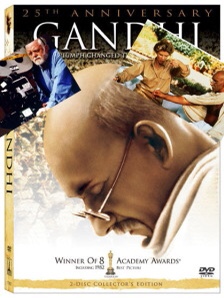
I am referring to the filming of a scene from Sir Richard Attenborough’s ‘Gandhi’ in which I had the privilege of working as an extra. The scene was the part of the story that depicted his time in South Africa, gathering support for his resistance against the apartheid regime there.

The set was the N.M.Wadia amphitheater of the 100-year old Ferguson College – a massive wood panelled hall with tiered seats. I was 26 and my vivacious girlfriend, Meghna Jadhav, was also an extra. A petite BA (Performing Arts) student, Meghna was a gifted actress herself and a member of Dr Mohan Agashe’s theater group. The producers had approached Dr Agashe for a bit part as well as help in organizing crowds of extras for the filming and he had in turn ‘sub-contracted’ the crowd gathering chore to Meghna and her friends.

So there I was. For two days, I was in the thick of it, watching the Mahatma (Ben Kingsley) deliver a rousing speech, exhorting Indians in South Africa to resist being treated as second class citizens. It was a master class in acting.

In the shot, Kingsley says, “Let us be clear about General Smuts’ new law : that all Indians must now be fingerprinted like criminals. That no marriage, other than a Christian marriage, is valid. That under this act, our wives and mothers are whores and every man here is a bastard. That policemen may enter our dwellings and demand our identity documents. Understand, they do not have to wait at the door. They may enter.”

At that point, an audience member in the front row springs to his feet in rage and swears he’ll kill the first cop who walks through his doorstep uninvited.

In the crowd I recall seeing Amish Puri, Alok Nath and Dr Agashe. I think it was Puri as that audience member but I may be wrong. It’s been a while. Puri’s timing was impeccable and so was Kingsley’s dialogue delivery. It was obvious that Kingsley had practiced painstakingly. I got to know the extent of his prep for the role only later on, when filming broke for lunch.

Attenborough had this quaint way of wrapping up a shot. He never said, “Cut!!” He simply stood up, came around the camera and said in a quiet hoarse tone, “That’ll be enough of that.” Similarly, I never heard him say, “All ready..3..2..1..Action!!!” In that same hoarse tone, he would simply say,”Ready when you are…..”

Candice Bergen was not in the scene being shot but she was present on the set, watching the filming. Bergen wasn’t a very well-known actress, at least not in India, so no one took any notice of her, beyond the usual gawking at a pretty gora woman. In fact, most of the actors on the set were not well known, so there were no stampedes for autographs or hordes of awestruck fans. The only recognizable faces were the ones I mentioned above and they sat through the whole thing with poise.

Every time Gandhi/Kingsley spoke, Meghna would be overcome with emotion and vigorously wipe her tearful face on my shirt. My repeatedly whispered ‘take it easy, this is just a movie, yaar’ did nothing to stop her. Other extras standing next to us began turning their heads to stare at Meghna and all this while the camera was rolling.

It got so bad that, at one point, while Kingsley was speaking the lines, “They can break my bones but they cannot break my will…..” Attenborough said, “A minute, Ben” and walked up the tiers of seats to where we were standing and confronted Meghna. Both of us thought this is it. We were going to be chucked out on our tushes.

Instead, the director’s face, ruddy from the heat and glistening with sweat, softened and he said words to the effect,” You know, I have been crying ever since I started reading up on the Mahatma. Cry all you want, just keep it down”. He gave Meghna a quick pat on the shoulder and his eyes twinkled mischievously as he added,” Or I’ll have to send you the bill for the delay”.

The unit broke for lunch and everyone dispersed. Meghna and I had nowhere to go so we hung around the set, tripping over wires and stuff, till we set ourselves down on the ground and leaned back against a large box filled with sound equipment. Silence had fallen over the set. Those days there were no hulking security guys with wires coming out of their ears to manhandle you, so no one asked us to leave.

As we sat by the box, I heard a shuffle and looked over my shoulder. Seated cross-legged alone, barely an arm’s length away, next to a bunch of dormant klieg lights on the dirt floor was a barefoot Ben Kingsley. For the shot, he had been wearing a coat and pants but now he had on just a kurta. He sat there soaked in sweat. There was a thali (ordered from the nearby Roopali restaurant) perched on his lap and on the floor by him stood a glass of mango lassi.

As Meghna and I gawked, Kingsley noticed us staring. He smiled and cleared his throat. Almost instantaneously, a whispered hum rose from his lips, exquisite in its melody and so soft that we could just barely hear him….

“Raghupati raghava rajaram patita pavana seeta ram (Hail Rama, lord and master. Hail Seeta and Rama, who make even the fallen, pure)”

He paused and looked at us gaping at him dumbstruck. Meghna shivered and clung on to me. Kingsley’s diction and tone was pitch perfect. He dropped the chapati on the thali and raised his palms together in Hindu supplication, his eyes drawn shut and his head swaying from side to side. Very softly, as if setting free something very fragile, he let out the rest of the words…

“Ishwar e allah tero naam, Sab ko sanmati de Bhagwan” (You can be Ishwar or you can be Allah, but your benevolence is toward all)

What Kingsley hummed so beautifully was a Bhajan (Hindu devotional song) that used to be Mahatma Gandhi’s favorite. That bhajan appears multiple times in the movie.

Kinglsey paused and opened his eyes and gave us another terrific smile. The spell broke and he resumed devouring his chapatis and veg pulao. And he chewed and chatted. He told us that he had been walking around barefoot for the past year or so. At first he had blisters but now he didn’t feel anything. In his Blue Diamond Hotel suite, the A/C knob was left at zero and he had thrown the sliding widows open. Instead of ordering room service, he was subsisting on the fruit basket that room service had left on a side table.

Shortly after being told that he’d been picked to play the role of Gandhi, Kingsley turned a teetotaler and he intended staying that way for the rest of his life. At night in his hotel room, he read from a paperback concise translation of the Bhagwad Gita and after a while, he curled up on the floor and slept. “I’m trying to get them to remove the carpet…..one can make do with so little actually……,” he told us, breaking into that Gandhi smile every now and then.

There was no question about it – the actor had been touched by the greatness of the Mahatma.

———————-

Later that afternoon, they shot the pass-burning scene at the playground outside the amphitheater. It was getting late and Meghna had a mid-term exam the next morning, so we split. We stopped by the Vaishali snack restaurant where I had a dosa and she a plate of idlis and then I walked her home on Tilak Road, across the Mutha River.

As we walked hand-in-hand, not a word passed between us. I tried to make light of it by saying, hey, we forgot to take autographs, but I gave up and fell silent. Usually there was a fixed pattern by which our evenings together seemed always to end – with a long canoodle. That evening was going to be a no-canoodle evening, looked like.

We had just witnessed something very special. For a brief moment, through a roundabout route, across a canyon of decades, our lives had been touched by the Mahatma.

Share this:

  • Share on X (Opens in new window) X
  • Share on WhatsApp (Opens in new window) WhatsApp
  • Share on Facebook (Opens in new window) Facebook
  • Email a link to a friend (Opens in new window) Email
  • Print (Opens in new window) Print
  • Share on Tumblr (Opens in new window) Tumblr
  • Share on Reddit (Opens in new window) Reddit
  • Share on Pinterest (Opens in new window) Pinterest
  • Share on LinkedIn (Opens in new window) LinkedIn
Like Loading...

We need a new God

13 Sunday Sep 2020

Posted by spunkybong in Uncategorized

≈ Leave a comment

——————————-

“Forgive, O Lord, my little jokes on Thee

And I’ll forgive Thy great big one on me.”

― Robert Frost

——————————————————————-

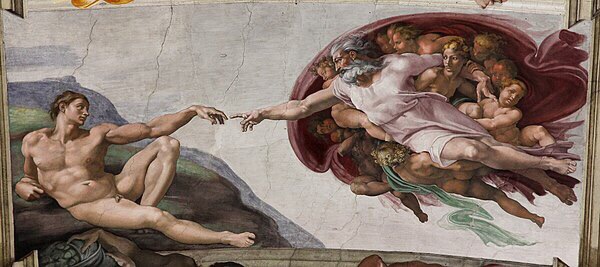
Michelangelo’s ‘Creation of Adam’, fresco on Sistine Chapel ceiling, Vatican, one of the most admired paintings of all time. (Photo courtesy: Wikimedia). Michelangelo got the inspiration for the fresco from a cloud formation he noticed one late night, when he was stoned. This has nothing ta do with the subject of this piece, though. I have always wondered why famous renaissance artists and sculptors liked to draw such tiny richards. Noticed his sculpture, ‘David’, in Florence? David’s twidledeedum is even tinier than Adam’s. Maybe Mikey had a midget richard himself and tried to feel good by sculpting even tinier richards.

————————————————————————–

There is no question left in my mind that we need a new God. The old one isn’t working anymore. We have developed a God-resistance, like you get antibiotic-resistant.

Quite early in my life, I took pains to see that I had very little to do with any holy scriptures. Most holy books fall over each other trying to tell us what evil really is. I was born a Hindu and as I grew, the concept of goddesses with ten arms and gods with elephants’ torsos began to seem laughable to me. I grew to know yet other gods whom our epics themselves depict as fallible and petty, with just as many human frailties as us humans.

Over the years, Hinduism has begun to seem more like an Asian version of a JRR Tolkien series, than a religion. While a billion of my compatriots in India have chosen to go nuts over it, I have decided not to. When they sat mesmerized in front of their TV sets for two hours every Sunday morning in the 80s, tears streaming down their faces watching the great epics, Ramayana and Mahabharata, the roads would be devoid of traffic and the city took on the look of a ghost town. While they sat glued to their TV sets, I biked to the park, rolled a joint and listened to ‘shine on, you crazy diamond’ on my Walkman.

At one point, my late mother – a pious Hindu – told me that I had to make the effort to become a believer and I asked her why. Then, when I met my wife, who is a Shia Muslim, I was curious. To please her, I tried to adopt her faith but I realized that it went one step further. It combined Hinduism’s ludicrousness with it’s own single-minded isolationist zeal. My wife felt my disenchantment and never mentioned it further. Amen.

——————————

There is a belief that the world really began to grow less and less violent after the 6th century BC and that it was due to the advent of organized religion and philosophical study.

To the east, Gautama Buddha first set the ball rolling, around the 500 BC. Buddha held that true moral purity arises from freeing oneself from material desires and petty squabbles through meditation and living an ethical life without being hurtful and resisting the temptation of coveting what does not belong.

Around the same time, 2300 miles to the north-east, the Chinese teacher, politician and philosopher, Confucius emphasized personal and governmental morality, humility in social relationships, justice and sincerity.

Buddha and Confucius were followed a few centuries later, by Jesus Christ. While the two Asians were low-key and stayed under the radar most of the time, Jesus arrived with a bang. (Oops, actually without a bang. His mommy, Mary, was a virgin). Be that as it may, Jesus came with bells and whistles, shooting stars, frankincense and myrrh. And a luminescent disc behind his head that he couldn’t ever shake off. When he turned his head it bobbed, momentarily caught off guard, but settled back behind his head once he stopped moving it.

When Jesus moved from Galilee to Judea, it was not the most oppressed region in the world at the time, by any means. Rome had been brutally crushing revolt and enslaving thousands in North Africa around then. At that very moment in time, 7000kms to the east, ethnic cleansings, torture, enslavement, rape and murder of commoners by officials of Qin and Han Dynasty China were the norm. 4000kms to the north-west, conquering Norse hordes were making landfall on the Suffolk coast, raping and looting, grabbing women and children for slave labor.

And yet, we didn’t see a Swahili-speaking mahdi in Luxor or a Mandarin-speaking wise one at Tianjin, or a blonde Gaelic prophet preaching to the masses in Northumbria. God chose a small postage-stamp sized region with a combined population of just 15000, to send in his messiah. Why?

The conquering Romans were willing to let the residents of Judea live their lives the way they wanted, as long as they submitted to the authority of Rome. They did not burn their temples and neither did they murder their rabbis. In fact, during Emperor Tiberius’s occupation of Judea, trade and commerce improved vastly, spurred by the stability brought on by the security that the mighty Roman military provided. In an otherwise arid land organized agriculture flourished, thanks to the Romans’ ingenuity with irrigation aqueducts.

The Roman empire lasted 700 years because they built secure societies in captured territories and instilled law and order for the first time. We like to curse the Americans for encircling the world in a choke hold of 800 military bases, but we do not realize how much stability that has brought and how big a boost global commerce has received from it. Imagine land grabs like the annexation of Crimea happening every other month and you would imagine a world without the American omnipresence.

—————————

Now, I am not suggesting that there was no persecution under the Romans or under the rich Meccan Merchant kings. Of course there was persecution and there was slavery. Heck, slavery at the time was the norm, like owning a Toyota Corolla. Everybody had one. Kids got slaves for their birthdays. Toys-R-Us must have been called Nubians-R-Us. Even those nice, curly-haired beacons of western civilization, the Greeks, had slaves. Even slaves knew they had to be slaves. I swear even slaves had their own slaves, somewhat like Tier-2 suppliers.

But given the violent times in which much of the world lived those days, the people of Judea were probably better off under the Romans than they would have been under the Mithradatans, the Scythians, the Bythnians, the Greeks and the omnipresent and vicious nomadic tribes that roamed the grasslands, burning and pillaging everything in their way.

Judea was by no stretch the hot spot, as regards persecution and yet the Lord chose it for the prophet Jesus Christ to deliver the wretched masses.

In any case, Jesus began to spread this altogether new concept called ‘love thy enemies’. Initially everyone thought he was nuts. The ‘civilized’ world till then, had known only wars, subjugation and misery. Boy, he must have sounded exotic, like Steve Jobs and his first Ipod.

Be that as it may, I doubt that the world is now less violent because of organized religions. Rather, I think it is less violent in spite of organized religion.

I think the reason why we have more order and less violence today, in terms of percentage violent deaths, is the awareness that has emerged out of scientific progress. I don’t have the data but Harvard Psychology Professor, Steven Pinker, does and he has quite eloquently expressed his arguments in his The Better Angels of our Nature.

We have all had the experience of reading about a bloody conflict, a suicide bombing or a shocking crime and saying, “What is the world coming to?” But Steven Pinker asks, “Wasn’t the world far worse in the past?”

Here’s my understanding of what Pinker’s book says…

Pinker’s research shows that neolithic humans killed each other with much greater frequency than today. At least 25% of all deaths those days were through violent conflict. Tribal warfare around the third millennium BC was nine times as deadly as war and genocide in the 20th century. In Medieval times, the murder rate in Europe was more than thirty times what it is today. Slavery, sadism in incarceration and frivolous executions were mundane daily phenomena of life for millennia.

Fucking hell, those days you were normal if you were born with PTSD.

Developed nations no longer wage wars between themselves, the last time that happened being 70 years back. And in the developing world, wars kill just a fraction of the people they did a few decades ago. Statistically genocide, rape, hate crimes, deadly riots and child abuse are all substantially down.

Today, deaths caused by violence amount to just .03% of all deaths worldwide (As per Pinker. I haven’t checked the stats).

What led people to stop sacrificing children, stabbing each other at the dinner table, burning cats, drawing and quartering criminals alive as forms of mass entertainment and even eating each other? The key to explaining the decline of violence is understanding the inner demons that incline us toward violence and the better angels within us that steer us away.

Those better angels led us toward the spread of government, literacy, trade, cosmopolitanism and multiculturalism. Increasingly, we have grown to control our impulses, empathize with others, bargain rather than plunder, debunk toxic ideologies, and deploy our powers of reason to reduce the temptations of violence.

Pinker, in short, says that we always had it in us to be good. We just didn’t know it.

———————————-

Things have however taken a turn for the worse. Physical violence might have lessened but there are other forms of violence in the world today, pernicious forms of evil such as ‘economic violence’, the evil that is perpetrated by the rich over the poor, by organized crime through untaxed wealth, through corruption and embezzlement. Involuntary negligent violence like politicizing a pandemic.

Oh yeah, the world is not only in need of a new God but it is in the need of a new messiah as well. Let him be a wise, good-looking Bengali messiah. There is only one and I happen to know him intimately…….. me. I can already feel the glow of the shiny disc behind my head. Wish I could somehow unstick it so I could use it as a car seat warmer in winter.

Share this:

  • Share on X (Opens in new window) X
  • Share on WhatsApp (Opens in new window) WhatsApp
  • Share on Facebook (Opens in new window) Facebook
  • Email a link to a friend (Opens in new window) Email
  • Print (Opens in new window) Print
  • Share on Tumblr (Opens in new window) Tumblr
  • Share on Reddit (Opens in new window) Reddit
  • Share on Pinterest (Opens in new window) Pinterest
  • Share on LinkedIn (Opens in new window) LinkedIn
Like Loading...

It’s open season

23 Sunday Aug 2020

Posted by spunkybong in Uncategorized

≈ Leave a comment

The North American caribou is a mid-sized deer that inhabits the Canadian and Alaskan tundra, far above the tree line. Timid and docile, they don’t hurt a fly and yet it is open season on them from Mid-August until Mid-September each year. The biblical “as you sow, so you reap” crap obviously does not apply to the caribou.

———————

If you are going caribou hunting in the Canadian Tundra, read this before you leave. It might save your life.

Foremost, you never call it a hunt over here. It is a ‘harvest’. You are going to harvest a deer, not kill it against it’s will. This is a wildlife conservation country. You conserve by killing, oh yeah.

In the west, you learn to couch your words. Forcibly kidnapping and transporting for the purposes of torture is rendition. Cancelling a supplier’s contract without reason, just because you can, is making a usage decision. The list of humans that are chosen by the CIA for targeted assassination by drone strikes is the disposition matrix.

But I like calling a spade a spade. It is a hunt you have chosen to go on. You will be killing in cold blood a living being who never did you any harm.

————————

Let me digress a bit here. This is called an ‘aside’ when a genius blogger veers slightly off topic, with a view to enlighten…

Australian moral philosopher, Peter Singer, speaks of ‘bio-ethics’ in his book, “Animal Liberation”. He asks us to imagine a really intelligent orangutan like say, Clyde, in the 1978 Clint Eastwood movie “Every which way but loose”. Clyde, a highly trained orangutan, acts like he is human. Even untrained Orangutans are known to be very intelligent and to display human-like emotions.

Now, compare Clyde with a child with Down Syndrome or a cognitively impaired woman stricken by Alzheimer’s. It is quite possible that Clyde might trump the above two humans in all those qualities that we take pride in as setting us apart from animals. And yet we would treat that child with Down Syndrome and that woman with Alzheimer’s with far more deference than we would treat Clyde.

So here’s the question – is it okay to stalk and kill an animal to eat it’s meat or simply for the sport, because we can? One argument is yes, it is okay to kill animals. Our digestive systems and taste buds are attuned to eating meat. We have evolved to be more intelligent and be smart enough to snare and consume. It’s the ‘cycle of life.’

The opposing argument asks us to imagine this .. ‘We men are physically stronger that women and if one assumes level of intellect between genders to be equal, men should be considered superior, so why should women have equal rights? Take slavery. Surely, there is no question white colonists were smarter than the black African natives – just as we humans are smarter than other living beings. If it is okay to hunt, why should slavery be condemned? Why shouldn’t the ‘cycle of life’ argument also apply to slavery?

——————-

My aside is over and if you still want to go harvest some caribou, read on..

It is September – caribou season, a one-month window when the Quebec Ministière de Forêts, Faune et Parcs permits you to hunt caribou. The period, coming just before the mating season begins, is well chosen. It is the time when the prey, getting horny and wanting to fuck, practices the least caution and emerges out in the open. It is the period when an animal is most vulnerable, easiest to kill.

Yeah, there is a designated season for everything. The MFFP designates the season for the type of device you can hunt with, the species, the number and even the gender of prey. The hours when you can hunt are restricted – usually a half hour before sunrise to a half hour after sunset. The zones where you can hunt, the kind of vehicle you can use to travel inside the hunt zone, when and where you can use hunting dogs or falcons, every tiny aspect is regulated. Break those regulations and you are looking at hefty fines upwards of $5000, confiscation of your firearm, license and even your truck and gear and worst, a ban if you display dangerous negligence.

Then there are the ‘random draws’. If you are a resident local, you can enter the random draw and win a tag to hunt one adult female deer or moose, over and above your regular quota of tags. Otherwise, hunting females is banned. You could also win a tag to go hunt inside protected wildlife reserves that teem with prey. That is permitted when the conservation folks at the MFFP deem it necessary to cull.

Notice that I keep referring to the word ‘tag’. A tag is a permit additional to your regular hunting license. You need to have the hunting tag on you when you are on a hunt. Non-compliance can land you in serious trouble if a ranger catches you without a tag. One tag gives you the right to harvest one animal. It is a piece of paper that specifies all the stuff that you can do, such as the type of game (deer, moose/elk, bear, boar or antelope). It is a form that has boxes on it that you’ll need to check if you kill an animal, the date and time of the harvest, the location and the sex and other descriptive features of the prey (eg: the number of points on the antler, etc).

The widely accepted way to mark a tag is to punch out (make a hole with your knife) the sections corresponding to the correct information pertaining to your hunt. So when someone says he “punched a tag” or “filled a tag”, it means he had a successful harvest. If a hunter says he had to “eat his tag” it means that he was unsuccessful, ie: instead of eating fresh wild game he is stuck dining on his permit. “Mmm, yummy tag sandwich…”

So, let’s say you punched your tag. Now you need to present the animal along with the duly punched tag at the nearest designated ranger station and the ranger will staple the tag to the animal’s ear. Up until then you are not permitted to decapitate the animal.

Wait, you’re not done yet. Load the animal back on your pick-up truck and drive to the boucherie. The boucher (butcher) will wait for the rigor mortis to pass which takes around 24 hours. He will then ‘dress’ the animal, which means skinning and removing the innards. Afterward, he will hang the animal up by it’s two hind hooves, inside a refrigerated room where the temp is maintained at around 0°C. He will leave it hanging there for around 5-7 days, to break down the collagen and allow the meat to age and gain tenderness and flavor. 2-3 decades prior, they left carcasses hanging outside in an unheated barn or shed but Septembers are a lot warmer now, so the fridge room.

After the visit to the boucher, you are done. Get back home and celebrate with a bottle of wine the fact that you murdered a living being who, given the option, would probably have liked to live on.

—————————

Let’s check out your weapon. You have brought along your TenPoint Viper. You have chosen well. A cross-bow is noiseless, except for the click of the latch and the twang of the string, hardly audible and easily drowned out by the howling wind. At 60 yards, the crossbow’s range might seem little but that won’t be a problem since the caribou don’t seem to mind it if you get real close.

So you get close, rest the barrel on something hard, aim and let loose. The Viper won’t start a stampede. A gun might.

The TenPoint Viper.

I remember the last time I used my Viper. It was on a moose hunt in 2016. The doe didn’t know what hit her, dead before she hit the ground. The bolt had pierced the left shoulder and exited through the right, not forgetting to bore a neat hole through her heart. After it exited, the arrow went on flying through the air with barely diminished momentum, disappearing in the brush beyond. I located and retrieved it, buried upto the fletching in the ground twenty feet beyond, it’s jagged saw tooth titanium point flecked with bone and sinew.

————————

Now lets backtrack to the caribou. A close cousin of the more popularly known reindeer, the caribou has the same magnificent antlers but is larger and heavier, adults sometimes weighing in at around 350-400lbs. Dressed and cleaned, a caribou will provide you upwards of 100lbs of fresh succulent meat. You won’t need to go to Costco for 6 months.

The other basic distinction is that while the reindeer can be domesticated, the caribou cannot. You won’t see any pet caribou but go up north and nearly everybody has a pet reindeer or two. The caribou is also the only deer species to have antlers on both, the male and female. In other types of deer, females do not have antlers.

The caribou, with it’s awesome antlers. The word “caribou” (meaning ‘like deer’) doesn’t have a plural. A hundred stupid caribous are still ‘caribou’.
An adult reindeer, the caribou’s darker brown cousin. It is interesting that, while the caribou’s grey-white pelt is a perfect camouflage against the snow, the reindeer has a much darker, more brownish and easily distinguishable hide. Perhaps nature noted this and decided to make the reindeer easier to be domesticated and thus, protected.

Unlike the moose or the whitetail, caribou roam in large, tight herds of hundreds, sometimes thousands. And like any beasts that live in a herd, they are way dumber – misled by the faux security in numbers. It makes them easier to kill. From the hunter’s perspective, there’s no thrill in the chase. A caribou herd is too closely packed. There are just too many of ‘em. All you need to do is aim in the general direction and you’ll have your allotted five kills.

But nature has given the caribou an even chance at survival, a compelling one that keeps them from being hunted with the same gusto as the whitetail and the moose – it is their habitat, a barren forbidding sub-zero expanse where the sun never sets in summer and never rises in winter, where if your frozen fingers fumble to cock your rifle or latch your crossbow bolt and aim within a few seconds at an approaching bear or wolf pack, it may turn out to be you that is the prey.

We have gotten too used to our creature comforts. Today’s hunter doesn’t want to fuck around in the -20° cold and face the very real possibility of losing the tips of his fingers and nose to frostbite, when he can just drive an hour east of Montreal and get a nice juicy whitetail, tag and register the kill, drop the animal off at the neighborhood boucherie and be back home by sundown. After 10 days, you drop by the boucherie and collect your 80lbs of succulent venison, in the form of neatly chopped and shrink-wrapped portions, take them home and stick them in your basement freezer. The whole hunt will cost you less than $200 including gas.

In comparison, a caribou hunt is a $15000 grand adventure, a northern safari, thousand miles from home, on barren land hundreds of miles north of the tree line.

———————

The first goal on a caribou hunt is not to punch your tag. It is to make sure you have the tools you need to survive the elements and get back home alive. Besides your Viper, bolts and paraphernalia, you packed your Bushnell Trophy binoculars, Galvatron flashlight, Nikon Weatherproof, battery packs and truck charger. And sunscreen and chapsticks. Dry skin and sunburn are omnipresent above the 60th parallel. Then there is your ‘peepee and kaka stuff’ – toilet paper and baby wipes.

You could pack a handgun, like a lightweight Glock, for emergencies(like frisky bears and wolf packs), but be aware that handguns are banned during season. But if you weigh the risk of being mauled against a fine, you would choose being fined wouldn’t you? A Glock however is not an absolute guarantee. It is just a fighting chance – if you broke your ankle and you’re lying in the snow, your back resting against a granite outcrop and you are trying to figure out how long it will take to drag yourself to the truck which is idling just beyond that ridge over there and at the same time, you are watching a large brown bear (otherwise known as ‘Grizzly’) approach, the chances he will get to you first and hurt you real bad are very high. It will have to be a head shot, right between the eyes, if you want to come out alive. Personally, I practiced at the range at Dorion for that eventuality, before I went on my one and only caribou hunt.

And medication. Pack a suitcase-sized first-aid kit that has, besides wound dressing paraphernalia, pill bottles of Tylenol(pain), Imodium(diarrhea) and Dramamine(motion sickness). Dramamine, because the rides (including the hair-raising ten-seater flight to the destination) are bumpy.

And chocolates – lots of Mars, Coffee Crisp and O’Henry bars. Nothing like chocolates to quell hunger and keep you warm.

————————

This is the Canadian Central Barren Ground, otherwise known as the Tundra. The caribou here are the almost white “barren ground caribou”. If you choose to hunt a little ways down south, but still above the tree line, you’ll come across the slightly dirtier-grey “woodland caribou”. Both species do not believe in migration. Dumb as doornails that they are, they just stay put and wait for you to come get ‘em. Here September is late fall.

Your Casio Rangeman says its 2pm and the temp is -20°C with wind chill. By late November it will have crossed -40°C. You have been outside the shack two hours and already the tips of my fingers and toes are numb and you are beginning to lose feeling in your feet, even with your fancy thermal socks on. That is a sign that you don’t have much time left before you have to get back inside the truck.

You are 20 miles south of Whapmagoostui, a Cree native American village (population : 20) at the edge of James Bay, the little spit of water which makes the 500,000 sq.mile Hudson Bay look like it is sticking its tongue out at the rest of Canada.

Tundra Adventures, the outfitters, had provided the charter flight to haul you over to the nearest airstrip at Kujjuarapik from Gaspé, where you had left your F150 at the parking lot of the Auberge sous les Arbres hotel. For 15,000 smackeroos you got a fully stocked shack at the site, a skiddoo (snow mobile), a Toyota Tundra with 100 free gallons of gas (ten bucks a gallon thereafter), a satellite phone and an insurance policy (subject to having a valid driving permit and hunting license). The policy included a free airlift to the nearest emergency ward, wherever that might be. Of course, you would have to be able to get your frozen fingers to dial the emergency number on the phone. Frostbite and hypothermia are unforgiving to fingers.

The Pilatus PC-12 with it’s single Pratt and Whitney PT-6 turbo-prop had been a scary flight. The forbidding sight of the terrain 12000 feet below was scary – sapphire blue lakes and snowy white pines, little patches amid a horizon to horizon expanse of white nothingness. If the Pilatus went down in there and you somehow survived the crash, you were a dead man for sure. Even a satellite phone wouldn’t save your ass in time for the medevac to arrive.

There had been six others in the charter flight, four hunters just as insane as you and two local Cree businessmen. The four were hardened arctic hunters – thrill seekers who had done this multiple times and got a kick out of, much like the American alpinist, Dave Hahn, who kept going back to the Everest, fifteen times between 1999 and 2013.

You learned that the four had always hunted in a group, but you are alone. Lone Daniel Boones are rare and they command a certain respect in the tribe. The four admired your spirit for that reason.

You are of course stupid to be alone. The Tundra is singularly unforgiving toward folks who venture out into the wilderness alone. The chances of your making it back in one piece, not frost-bitten and not bear-mauled, are less than four in ten when you’re alone. You won’t hear a bear coming until it is lightening your weight, removing pieces of skin and flesh off your back. If its any consolation, he won’t eat you. Bears don’t enjoy human flesh. He will just want to maul you to death, that’s all.

Or say your Toyota Tundra broke down on the hard-packed ice thirty miles from Whapmagoostui. Or maybe you just switched off the ignition, inadvertently. In the Tundra you don’t switch off the ignition. From the time the outfitters handed you the keys to the truck, right up until you hand them back three days later, the engine will be running, non-stop. You just have to keep gassing it up, time to time.

But it can happen – the Toyota is a machine after all – and when it does pack up, that is another way to die in the Tundra. For that reason, Caribou hunting is always done in groups of at least four, in two trucks.

Another reason for the multiple hunting buddies is you are permitted by law, four caribou per person and you’ll get your four kills within the first couple of days, easy. But if you are alone, what are you going to do, carry their 300-lb bulk all on your back all the way to the truck? And if you have shot two at the same time – when you’re back for the second carcass, there’ll be just blotches of blood left on the snow and a pack of twenty timber wolves, a welcoming committee waiting to tear you to pieces.

But then you are just that – a loner – and you are prepared to face the challenges that come with being one. The 18-round Glock in your jacket won’t save you from a wolf pack. They will keep coming at you. But it will scare away a bear for sure.

There you have it. Now go get ‘em.

Share this:

  • Share on X (Opens in new window) X
  • Share on WhatsApp (Opens in new window) WhatsApp
  • Share on Facebook (Opens in new window) Facebook
  • Email a link to a friend (Opens in new window) Email
  • Print (Opens in new window) Print
  • Share on Tumblr (Opens in new window) Tumblr
  • Share on Reddit (Opens in new window) Reddit
  • Share on Pinterest (Opens in new window) Pinterest
  • Share on LinkedIn (Opens in new window) LinkedIn
Like Loading...

Zapped, Zonked, Zoned…. Baked, Blown, Blasted

22 Monday Jun 2020

Posted by spunkybong in Uncategorized

≈ Leave a comment

You might remember Ken Kesey from of his 1963 novel ‘One Flew Over The Cuckoo’s Nest’ and it’s more famous film adaptation. By the time the movie was released in 1971, Kesey was already creating a stir within conservative America.

Kesey was quite a piece of work. He was the kind of guy to whom if something looked weird, he was probably going to try it. He volunteered for the testing of a psychotropic drug that was later to be known all over as LSD or simply acid. He ended up loving the stuff, happy that he was getting paid to do a fun thing like getting high on it.

For the tests, Kesey had to be kept under observation in a hospital ward. One night he crept out of his bed, broke the lock of the infirmary and stole as many vials of LSD as he could lay his hands on. Fortunately there was no inventory list and his nocturnal raid went unnoticed. For the rest of his hospital stay he was perpetually zonked out of his mind, even on days he was not administered the drug, leading the researchers to draw entirely erroneous conclusions. And Kesey? Yikes, he was hooked. Cuckoo’s Nest incorporates some of his own experiences inside that hospital.

Ken Kesey became one of the symbols of the counterculture hippie movement that began in the 1960s. By the time I became a part of the counterculture scene, it was no longer that counter. Heck, I had pot-smoking professors in engineering school. Everyone was stoned. While I drew the line at an occasional Saturday night pre-movie joint of Trichy weed or fresh moist ‘Tal hash, the other guys were doing pills like mandies (Mandrax), lippies (Lippitone) and dexies (Dexedrin).

In 1970s Chennai in southern India, where my engineering school was situated, you could get powerful ‘downers’ and ‘uppers’ over the counter fairly easily. All you had to do was find a bent pharmacist and mumble a phony doctor’s name to him which he made a note of and then charged you a rupee a pill. For a broke student in those days, a rupee was a fortune.

The go-to guy for pills was a pharmacist near Moor Market, a cavernous building right next to the rail station, which housed hundreds of tiny stores crammed together, selling stolen and second-hand stuff – books, household appliances, electronics. Even the pennies there were bent. (Don’t try looking for Moor Market now, it doesn’t exist anymore).

The pharmacist himself was a heavy user, stoned out of his mind on mandies most of the time. Mandies and Lippies were very strong sleeping pills and the kick came when you resisted the drowsiness. If you took two of them, they could put you in such a tailspin that when you finally stopped resisting the snooze and let go, you ended up sleeping the next 48 hours, dead to the world.

I tried a Mandy once but found that when I spoke, the words came out funny. For example, if I wanted to say, “lets go for a movie, dude”, it sounded more like, “leh wo foah yayy mooo, joo”. After that one time, I decided that those kicks were not for me. Talking like a retard was not my scene.

Dexies on the other hand, kept you awake. I tried dexies too but like mandies, it was just once. Boy, did they keep me awake. I was stark, raving awake. The downhill after the drug wore off, was really downhill. I slept for a whole day.

Pills were very much in the scene at college, oh yeah. Guys took dexies going into class and mandies and lippies coming out of class. At any given time of the day, around half the population in campus was staggering around.

I didn’t mind getting high on weed occasionally those days, but I got stoned only to listen to music with friends, within the confines of my dorm. I had to have control, even when I was zapped. If I went out in public, stoned, there was a possibility I might start behaving like a jerk and that I could not tolerate.

Bands like Jethro Tull, Jefferson Starship, Uriah Heep and Pink Floyd were great music to get stoned with. Here’s the thing about marijuana, for those who have never tried it – even the crappiest music sounds like the work of a genius. Every tinkle, every note and every beat is sort of embedded into the consciousness through some sort of osmosis. The most mindless lyrics sound intelligent and deep. If you are lying down, the bed will seem to float up after a while. Even movies….if you are watching something really crappy, like one of those old KL Saigal films, it will seem like an edge of the seat masterpiece.

But if you are tired, depressed or stressed out and if someone passes you a chillum, don’t go for it. Just as it enhances the good, weed will amplify the bad too and your trip is quite likely going to turn into a nightmare.

Here are the other things weed does to you…. it makes you really hungry as hell. You’ll want to eat just about anything you can lay your hands on. And then there’s sex. If you are with someone who is stoned too, sex after a joint is just beautiful. You will turn into the world’s greatest lover. And she, Raquel Welch. Yucky stuff, like going down on her that you wouldn’t dream of doing otherwise will seem natural for you to want to do. Cross-eyed, sniveling, skinny, flat-chested, bad breath, smelly armpits, they will seem overpoweringly sexy to you.

In the end, after the effect of the marijuana wears off, you will fall into a deep restful sleep and if you haven’t had one too many joints, you will wake up fresh, without any hangover or any other after effects at all.

————————————

Wait, before you begin to think smoking pot is great, there are long-term side effects to regular marijuana use. Besides medical issues such as BP, lung cancer and pulmonary problems like bronchitis, prolonged use also affects you psychologically in tiny incremental stages. It makes you lethargic, impractical, unrealistic, aimless and generally unconcerned about your future. It makes you edgy, impulsive and easily excitable. Prolonged marijuana use is also known to play havoc with short-term memory and is believed to be responsible for a sizable number of incidences of Alzheimer’s Disease.

Nowadays I see how marijuana is becoming more and more socially acceptable and easily available and legislation is being tabled all over the world, to legalize it’s use. Frankly, I do not think that legalizing marijuana is a responsible thing for governments to do. Look at cigarettes. It might sound crazy now, but back in the 1930s, doctors actually recommended smoking ‘to remain fresh and alert’.

“Give your throat a vacation,” says this doctor in the 1931 Camels ad. Yeah, right.

——————-

ThIs fun and frolic-themed Peter Stuyvesant ad was a fixture on the back cover of Time magazine right up until the early 1990s

——————————-

”You’ve come a long way, baby,” says this 1970s Virginia Slims ad, attempting to link feminism and emancipation to smoking

———————————

Clean and healthy living never had a chance. Having an icon like James Dean model for Marlboro got millions of teenagers across America hooked.

———————————

The pendulum has swung. Today, cigarette ads are banned outright, everywhere across the world. In Quebec, stores are banned from even displaying cigarette packets on shelves. They now have a kind of hinged flap behind the counter that, when down, hides the packs from the eyes of a customer standing at the counter. The aim is to keep minors from seeing the cigarette packs and wanting to smoke. Seems a bit stupid if you ask me but any effort to reduce smoking is welcome. Look what banning cigarette ads, prohibiting smoking at public places and constant anti-smoking campaigning has done – cigarette smoking in North America has fallen from 45% among adults in 1950 to 19% in 2010. I am one of the 19%. I left smoking a decade back. Yay.

Cigarette shelves with their flaps down, behind the counter in a Quebec convenience store

—————————-

Then there was hooch.

Back in the 1970s, the Indian state of Tamil Nadu where my engineering school was situated, was under prohibition. Regular liquor brands were available on the black market but penniless college kids like me couldn’t afford them. And as 1920s America showed us, the moment the prohibition began in 1972, our own Al Capones, Joseph Kennedys and Dutch Schulzes came out of the woodwork with their bootleg liquor – Arak, an often lethal concoction.

Just outside the Velacherry gates of our college campus was a sprawling slum that had a hooch den. It was a ten by ten wooden platform in the center of a clearing in the palm trees. In one corner of the platform sat a massive, menacing lady with huge jugs, a dirt-caked drum of hooch by her side. For the villagers she had a look that said ‘you get outa line by even a micro-inch and you’ll get your butt kicked outa here’. She plunged the glass inside the drum with her grubby hand and handed the customer the spilling and sploshing drink.

Everybody called the woman Amma (‘mother’, in Tamil). She operated the den under a single light bulb that was connected by a long wire which traveled overhead supported by branches and palm fronds to a nearby hut that had electricity. The lamp threw long eerie shadows.  Scrawny, inebriated day laborers staggered up to the woman with their hands clasped together in supplication, imploring her for one last slug for the road, signaling that they had run out of cash. For her financial well-being, Amma was mandated to keeping them hooked but she decided who could have one more and who could not.

A typical Indian hooch den. The Amma is off camera.

————————-

Students like us were given the red carpet treatment by Amma. Somehow she felt legitimized and honored by our presence (the way Kim Jong Un must feel when he gets to meet world leaders). Rickety steel chairs were hastily arranged for us and we were served the Arak in glasses that had been equally hastily washed in a nearby stream which didn’t exactly originate from a Swiss mountain spring. Twenty pairs of drunken eyes then watched us spellbound as we downed the stuff. The taste was terrible and if one of us made a face like a grimace, there was raucous laughter all around.

The liquor was colorless and if you looked closely, you could find stuff floating in it, some of the stuff multi-legged, able to propel themselves on their own. If you were desperate to get high as we sometimes were, then you closed your eyes, took a deep breath and downed it in one shot. Quite honestly, I am lucky to be alive and disease-free.

——————————-

But in all this, there never was any of the really hard stuff like crack or heroin going around in our college dorms, at least not in my time there. Thank the Lord or I would have tried that too and who knows, I might have gotten hooked.

Eventually after five short years of merriment and bliss, I graduated with a bachelors in Mechanical Engineering with honors. I recognized that I had to earn a living and so I left all the stuff we got high on, behind. Thereafter I touched only beer occasionally. No, make that every weekend, until June 2013, at which point I stopped even the beer. I am now a teetoatlah. Yay.

——————————-

Sometimes I think back on my college days and wonder what made me pull back from the brink of addiction while so many of my classmates succumbed. I recall with sadness a dear hostel-mate, a promising undergrad, who plunged to his death when he climbed out onto a 3rd floor window ledge of our dorm completely stoned, lost his footing and fell out head-first.

But I Didn’t end up splattered on the concrete. I think my holding it together had much to do with the company I kept at college, the circle of friends who coalesced around me and matured with me through engineering school. Like me, they experimented and got high but knew when was enough.

I don’t know if the Virginia Slims girl managed to get there, but I’ve come a long way, baby.

Share this:

  • Share on X (Opens in new window) X
  • Share on WhatsApp (Opens in new window) WhatsApp
  • Share on Facebook (Opens in new window) Facebook
  • Email a link to a friend (Opens in new window) Email
  • Print (Opens in new window) Print
  • Share on Tumblr (Opens in new window) Tumblr
  • Share on Reddit (Opens in new window) Reddit
  • Share on Pinterest (Opens in new window) Pinterest
  • Share on LinkedIn (Opens in new window) LinkedIn
Like Loading...

Everything east of the Cape…

25 Monday May 2020

Posted by spunkybong in Uncategorized

≈ Leave a comment

“Business is by nature collusive and conspiratorial, readily congealing into monopolies and cabals and it is a good thing, a must for Britain’s prosperity. We must fix the highest gain that can be squeezed out of the natives.” – Robert Clive (1725-1774), British business executive, army Major General, opium trafficker, plunderer and mass murderer.

——————————————–

Crest of the British East India Company, once the world’s largest business organisation and the world’s only commercial outfit that boasted a standing army of 250000 (Image source: Wikimedia)

On a bone chilling evening in January 1601, Britain’s Queen Elizabeth signed a royal charter, granting a joint stock company that had 220 merchants working for it, a trade monopoly in all the regions of the world that lay to the east of the Cape of Good Hope. Thus, the British East India Company (EIC) was born. In the 280 years that it existed, the EIC grew to be the world’s largest and single most unscrupulous business entity that man has ever known.

The Brits had it good, didn’t they? East of the Cape. With a flick of a ink-dipped quill, an ugly overweight woman with bejeweled fingers gifts half the world to just one company to do business with. Look at them now, making feeble attempts to look independent with their Brexits, Megxits and so on and no one takes them seriously anymore. The fall took another 350 years but good riddance anyway. Now I, an Indian, can tell a Brit to go fuck himself, better still, ”fuckxit”. No one will bat an eyelid.

The East India Company began with a simple mandate – commerce. It brought in silks, textiles, spices, coffee, indigo, tea and ivory from India and carpets and nuts from Persia and the rest of the middle-east, in exchange for gold and silver. The EIC leadership was made up primarily of British military officers and therefore it backed up it’s exclusive business with a standing army of 250000 soldiers, artillery and a fleet of ships.

And opium, the EIC dealt in lots and lots of opium. The quantities it trafficked would put the Colombian cartels and the Calabrian ’Ndrangheta to shame. The EIC made opium consumption fashionable. You weren’t a member of the 18th century London haute société if you didn’t regularly peruse opium. Where do you think Sherlock Holmes got his daily fixes from?

There was competition of course, though not from other British business entities. There were other jackals at the kill – the Dutch East India Company, the French East India Company and the Portuguese East India Company. And they had been there before the EIC. India had many suitors but the Brits won out, through sheer military muscle.

To make all that trade happen smoothly and profitably, the logistics had to be worked out. The EIC first set up an office at a coastal village with a natural harbor in south India, called Machlipatnam. From there, through the 17th century, it spread and established fortified trading posts at Mumbai, Chennai and Kolkata.

—————————————-

The logistics of the day weren’t like the way they are now. A business trip to and from India by a boss from the East India Company’s HQ in London was more like how we see inter-planetary space travel today – long and hazardous. Each trip to India was a two-year expedition, with four to six fully armed ships, mounted at considerable expense and fraught with immense risk. The waters were uncharted since the maps were rudimentary, the weather patterns were unfamiliar, tempests and 50 foot waves were frequent and as if that was not enough, pirates prowled the seas for easy pickings and they took no prisoners.

Given all the hazards, the chances that you would be back, sipping sherry with your mistress in a London salon at the end of it were 20-80.

If you wrote a letter to your branch rep in Kolkata, you would be lucky if his response came within the year. Under these circumstances, the EIC branch heads or ‘Governors’ were given an enormous amount of independence in how to conduct their business. And what happens when you have an employee at the other side of the world doing business any which way he likes? He throws the rules to the winds, kicks native butt and enriches himself of course.

Take it easy, don’t begin envying the Company men. Life was hard. Enriching oneself in the face of attacks from the French or the Portuguese, who were the other hyenas at the kill, or even the armies of the native rulers, or killer diseases like typhoid, flu, TB and malaria, the life of an EIC rep was not for the faint-hearted.

The EIC’s trading post chieftains were merchants and military commanders rolled in one. They had in their payroll, large armies that protected what they saw as their turf. If a regional raja or nawab didn’t negotiate business with them reasonably, he was looking at being invaded and ousted.

The Nawab of Bengal, Siraj ud-Daulah, was one of those unfortunate nawabs who paid with his life for his obstinacy, in the Battle of Plassey (c.1757). Those days, the British were still just traders looking for a secure base from which to conduct their business with Indian merchants. When they began to look like they were digging in and building a small empire within his territory, the Nawab told them to desist and leave.

Imagine a empire-building testosterone pumped white guys being told by some two-bit brown nabob to get the fuck out. Robert Clive took it personally.

In those days if you spoke up, you had to back up your words with military force. The Nawab and his league of like-minded Bengali military commanders had on their side, 45000 infantry and 20000 cavalry. Artillery had been provided by the French who saw the British as a threat to their own French East India Company, a similar ‘carpet-bagging’ outfit under the then French King Louis XIV. The French held two bases in India, one in Chandannagar, 50kms from Kolkata and the other in Pondicherry, a coastal town south of Chennai.

The EIC’s commander, the robber-baron I mentioned earlier, Colonel Robert Clive, had just 3000 men. The Nawab’s firepower should have been sufficient to beat the crap out of the Brits. But Clive had guile and a cool head. Like any successful military man, he had human intel and he looked for the enemy’s weaknesses. He came to know through a Bengali birdie that the Nawab had a huge stockpile of gold and silver that he had grabbed from his subjects over the years as tax and had not thought to share with his equally rapacious commanders.

Clive sought out those commanders and got them to change sides, after promising them a share of the spoils (which by the way, they didn’t get when the dust settled). The Nawab ran for his life, was caught and executed. What can I say? A Nabob who didn’t share was a dead Nabob, I guess.

Siraj-ud-Daulah has been portrayed by Robert Clive’s biographer as an 18th century Cesare Borgia, a mercurial monster of vice and depravity, given to harsh cruelty toward his subjects. I read somewhere that when he sent for his senior commanders, they trembled, much like the way those New York Mafioso felt when they were summoned for a sit-down, not knowing if they would come out feet first. Even if Bobby Clive’s biographer had been biased, enough is on record to suggest that maybe the Nawab got what was coming to him.

After his victory, Clive installed Mir Jaffar, the commander who had switched sides, as the new Nawab of Bengal and did what his EIC masters in London had emphasized was his Key Perfomance Criterion – loot, a word that actually originated from the Bengali word ‘loot’, which means just that – loot. Clive’s men looted Bengal’s treasury, loaded the gold and silver worth over 5 million 1757 dollars (which is around $ 1 billion today), on to a fleet of more than a hundred barges and sent them downriver to his base at Kolkata.

“Where the f—k is my share?” Sucker of the day, Mir Jaffar, with Robert Clive after the Battle of Palashi. (Image source:Wikimedia)

Clive got to keep 10% – 500000 dollars (~ $100 million today) for himself – finder’s fees, I guess. Palashi was the first step in the creation of the British Empire in India. It is perhaps better understood as the company’s most successful business deal.

500K here, a bag of diamonds there and Robert Clive went on to become one of the world’s richest men. Unfortunately, he broke the golden rule for drug traffickers and it took his life – he got hooked on the very opium that he traded in, to dull the pain that one historian says was caused by gallstones. One night, unable to bear, the constant pain, Clive over-dosed in a drug-riddled moment of frenzy. Poetic justice, innit?

In India, right up until the 1970s, they still had roads named after those British colonials. Thyagraja Marg in the heart of the Indian capital, New Delhi, was till recently Robert Clive Road, while in England the statue that adorns the frontage of the British Foreign office is his. Clive’s partner in crime, Warren Hastings, the first Governor General of India, had till the late 1970s numerous streets, buildings and parks named after him all across India. Oh yeah, we Indians have been in boot-lick mode for decades after gaining independence.

There was another act that the East India Company excelled in, just like the Exxons of today who splurge millions on ‘green’ ads. It went to great pains explaining to the public at home how it was delivering the wretched Indian natives from deeply ingrained backwardness, how it was planning to remodel education, how the ‘ignorance and superstition that was inherent in Hinduism’ was being addressed by dedicated Christian missionaries in its payroll. (The world hadn’t yet woken to pedophilic Christian priests but let’s just say that the first missionaries must have had a ball in India and leave it at that).

———————————

As the decades passed and the 19th century dawned and the Mogul Empire waned, the EIC’s mandate expanded, from just commerce to subjugation. The East India Company grabbed more and more territory as its own until all of India was theirs. The new nabobs were now the EIC chieftains like Robert Clive and Warren Hastings, wielding enormous power, not only in India, but in England as well, where they bribed, threatened and cajoled their way into both houses of Parliament.

The EIC now had, not only a trade monopoly, but also the right to tax the Indian citizens, mint its own coins with the company crest and maintain a 250000-strong army. For a while, before the bubble burst, EIC owned not only India but England as well. Profit became everything. It is universally believed that the great Bengal famine of 1770, which claimed the lives of 10 million of Bengal’s poor and the wretched, was brought on by rapacious greed and the lack of governance of the EIC.

A one rupee coin issued by the East India Company (Photo source: Wikimedia)

Seeing that the harvest was doomed, EIC’s traders started buying up all the grain that they could lay their hands on, driving up the price and making it impossible for the poor Bengali commoners to feed their families. As if that was not enough, the EIC decided to raise taxes so that revenue levels would remain stable.

Those who aspire to rule have a responsibility toward their subjects. EIC was not concerned about any such responsibility toward the native Indians. But what the EIC honchos hadn’t bargain for were the men with a conscience back home (ie: if one can imagine colonizers having consciences). There was Adam Smith (1723-90), Scottish moral philosopher and economist and Edmund Burke (1729-97), an Irish author, orator, philosopher.

And a prick named Lord Thomas Macaulay (1800-59), historian and Whig politician, who loved listening to his own voice. Macaulay had gained infamy for attempting to wipe out the native languages of the colonies and replacing them with English He once remarked that the world was divided into two categories of people – civilized and barbaric. Britain of course was, in his scheme of things, the torchbearers of the former category and the colonies, the latter.

But even an asshole like Macaulay was alarmed enough by the shenanigans at the EIC that he had this to say about it…..“The traders of the East India Company simply wrung out of the natives every drop of blood as speedily as possible, so that they might return home to marry a peer’s daughter, buy some rotten borough in Cornwall and throw balls in St. James’s Square.”

All these “venerables” denounced the East India Company as a bloodstained bunch of thugs, bent upon mercilessly raping a nation of its wealth. Some historians consider the aftermath of the 1770 Bengal famine as the beginning of the end of the East India Company’s presence in India.

Around the same time as the Bengal famine, other events were conspiring to pull the rug from under the EIC’s feet. Its stock price crashed on the London market, in lock-step with a Europe-wide financial meltdown. The EIC’s handling of the Bengal famine came to the notice of the British parliament and did little to bolster investor confidence.

By the turn of the 18th century, the British government had taken away EIC’s monopoly and finally in 1873, the East India Company ceased to exist. India now became a full-fledged colony of the British Empire.

——————————

During its heyday, the East India Company not only established trade through Asia and the Middle East but also effectively became the ruler of territories. It created colonies like Singapore, an island that the EIC purchased from the ruler, the Sultan of Johor, and developed into one of the world’s richest and busiest mercantile hubs.

The East India Company has had quite a few parallels, in the modern age. The American conglomerate United Fruit Company owned every tiny Central American nation, to ensure unimpeded imports of fruits, especially bananas, into North American and European ports. The American mob co-owned Cuba, with the American telephone monopoly International Telephone and Telegraph. The solid gold telephone that the ITT rep presents Batista in Godfather II, really happened.

Some commentators opine that if Stalin’s Soviet Union hadn’t gone overboard with its purges and gulags, American style capitalism would have lost out to socialism and we would not have had to see the Reagans and Thatchers gloating obscenely, mistaking overkill for victory of the forces of good.

————————-

The late comic genius, Robin Williams, put it quite simply in December 2008 when he was performing in front of Britain’s Prince Charles. Referring to the placard that the US President, Harry Truman, had hung up on the wall behind his desk, which read, ‘the buck stops here’, Williams gave it a twist – ‘Yeah right, the buck stops here…for just a wee moment….and then it sorta ambles on, to Boeing and GM.”

Share this:

  • Share on X (Opens in new window) X
  • Share on WhatsApp (Opens in new window) WhatsApp
  • Share on Facebook (Opens in new window) Facebook
  • Email a link to a friend (Opens in new window) Email
  • Print (Opens in new window) Print
  • Share on Tumblr (Opens in new window) Tumblr
  • Share on Reddit (Opens in new window) Reddit
  • Share on Pinterest (Opens in new window) Pinterest
  • Share on LinkedIn (Opens in new window) LinkedIn
Like Loading...

The Banana Wars (Part-1)

20 Wednesday May 2020

Posted by spunkybong in Uncategorized

≈ Leave a comment

It is the most abundant fruit in the world, available all year round at every grocery store regardless of ethnicity. Whether it is a mom and pop operation or it is a large chain store in Beverly Hills, you’ll find it occupying multiple shelves and if you look closely at the UI tags, you will never see a price more than 99¢/lb.

It is also perhaps the most consumer-friendly fruit known to mankind, with no worries about whether it has been washed before you sink your teeth in. Just peel and chomp. It leaves no aftertaste and I guarantee your breath won’t smell from it. You can walk while you chomp and when you are done, just flick the peel into a garbage bin without missing a step.

And don’t worry about sticky juices squirting from it and messing up your fingers or shirt front. It is firm but not hard, sweet but not chocolaty and as you chew, it melts inside your mouth with ease, without sticking to your gums or between your teeth.

It is packed with nourishment. Rich in manganese and potassium, vitamins B and C and dietary fibre, it is the perfect little snack to gobble if you are ravenously hungry but have to watch your weight at the same time. If you have ulcers and cannot remain on an empty stomach for too long, one is enough to keep the gastric juices at bay. And I have never heard of anyone who has an allergy to it.

You can gobble down as many in one sitting as you like. There’s no downside in eating too many of them. Just be sure to gargle afterward, as the little bit of sugar that is in them may cause tooth decay, long term.

Horny middle-aged women too have a unique use for it but I am too straight-laced to tell you about that.

Meet everyone’s favorite snack – the banana, the world’s fourth most popular food item after rice, wheat and milk. If you live anywhere on earth, bananas are sure to be a permanent item in your grocery list. Transported raw, they get just ripe enough by the time they are displayed on the grocery shelves.

——————————-

There was a time when the banana was a virtually unknown fruit in the developed west. That is, until an American named Henry Meiggs (1811-77) inadvertently started the banana boom.

Meiggs was one of the early robber barons of American business, an enormously powerful and ruthless individual who stopped at nothing to build a vast empire and lord over it. He was the torch bearer for the Kennedys, the Du Ponts, the Rockefellers and the De Beers.

Born in Catskill, NY, Henry Meiggs made his mark building railroads for Chile and Peru. Endowed with great entrepreneurial talents and a complete lack of scruples, Meiggs battered and bludgeoned his way through entire Latin American governments to make his millions.

So powerful had he grown by the 1850s, that Henry Meiggs was considered Peru’s de-facto monarch. Here is a Peruvian bank note with his signature on it.
———————

In 1860, while Meiggs was in Peru, he was approached by President Tomás Guardia of Costa Rica, who wanted a railroad built to connect the Caribbean Sea port of Limón to the national capital, San José. Here is where the great banana story began.

At that time, Costa Rica’s economy was based mainly on coffee exports. Coffee was grown in the central plains around the capital city of San José and transported by mules to the nearest port at Puntarenas on the Pacific coast. Due to the ruggedness of the terrain to the east, the mules could not go the other way, to Limón on the Caribbean coast, from where the lucrative European market would have been easily accessible, across the Atlantic.

There was no Panama Canal in those days and so the coffee would travel by ship eastward from Puntarenas. Creating a railroad to carry the coffee east, direct to Limón on the Atlantic seaboard and thereby gaining easy access to Europe’s coffee drinkers became top priority.

Meiggs took the mega-contract but before he could begin building the railroad however, he died. Eventually, 14 years after his death, the construction was restarted by one of his nephews, Minor Cooper Keith, 14 years after his death.

Minor Keith eclipsed his illustrious uncle in ruthlessness and ambition. He saw opportunities that his uncle hadn’t. He and his partners got the Costa Rican government to donate free of cost 800,000 acres of prime land along the railroad he had built and he promptly turned the land into an enormous banana plantation. The new venture was called Tropical Trading and Transport Company.

While the passenger load density on the new railroad proved disappointingly low, Keith found that transporting the bananas he grew was enormously profitable. The railroad carried the bananas from his plantations to Limón and from there on to the US and Europe by ships that he and his partners owned and operated.

What is capitalism without mergers? And so it was with Minor Keith’s business. In time he merged his company with an equally gi-normous rival banana grower, Boston Fruit Company and the newly formed behemoth was named United Fruit Company (UFC).

It was a synergy made in heaven – Minor Keith’s railroads and ships and Boston Fruit’s pet Central American dictators and tax-free land that was ideal for banana plantations. At it’s height, 1930s to 50s, United Fruit Company directly controlled and distributed 90% of all bananas grown in Central America, the Caribbean and Northern South America.

In the movie Godfather-II, the rep of ‘General Fruit Company’ is shown at the conference table with the Cuban dictator, Fulgencio Batista, who was later overthrown by Fidel Castro. It is a thinly disguised reference to United Fruit Company which in it’s heyday, backed up by a garrison of US Marines, behaved like it owned Cuba.

The dictators, whom United Fruit (and the US government) went to bed with, were essentially nothing but powerful thugs inside a backward, desperately poor agrarian region, their main crop – bananas, a tasty novelty that America and Europe were just beginning to relish. These thugs maintained a highly unequal feudal structure that terrorized and subjugated the common folk.

The term Banana Republic was first coined by the writer, O’Henry, in his 1904 novel, “Cabbages and Kings”, to describe a fictitious Caribbean country called Anchuria, his narrative inspired by what he saw during a visit to Honduras. O’Henry meant Banana Republic to be a derisive term used for poor, backward nations that are riddled with corruption and whose despotic rulers were beholden to the United States for their personal survival. Nowadays the term is used more broadly, to refer to any autocratic regime ruled by a demagogue who thinks he is the law. Russia – and in some ways, even Trump’s America – can fall into the category of a banana republic today.

Interestingly, partnerships with the US were invariably unstable. Whenever the tin pots could not deliver the free and safe environment necessary for American companies to operate in, or if suddenly the ruler of the republic started feeling that the Americans weren’t paying him enough, disputes broke out and an invasion force of US Marines came in, to facilitate a coup and install a more pliable tin pot dictator.

Direct American military invasions into sovereign Caribbean and Central American countries were rampant in the first half of the 20th century. Between 1900 and 1945, the US invaded Honduras five times, the Dominican Republic three times, Haiti twice, Nicaragua thrice, Cuba thrice, Panama thrice, Guatemala twice and El Salvador once. This, in spite of the fact that none of these nations had ever done the US or any of it’s citizens any harm.

Wherever the marines went, CIA black ops agents were not far behind. They followed the GIs, torturing and murdering opponents of the regime they wished to install, training counter-insurgent death squads for those puppet regimes and terrorizing the general population. They were like the Nazi scum known as SS Einsatzgruppen who followed the regular Wehrmacht troops into the Soviet Union as a part of Operation Barbarossa, the invasion of the Soviet Union, in 1941.

———————————

In order to justify America’s strong-arm tactics in Central America and the Caribbean in front of the world, the US began a PR blitz that made America the civil liberties champion of the world and the Soviet Union the fall guy, even though declassified CIA documents show that it was all spin and that there had never been any commie threat at that point in time (The Cuban Missile Crisis came decades later).

The man chosen to be America’s spin master for the PR barrage was a very able guy whom the Americans proudly tout today as the ‘father of public relations’, a man named Edward Bernays. He achieved unparalleled success in projecting America as a benevolent, pain-filled and saddened nation which had no choice but to invade and save democracy and the rule of law. His successes led PR to ultimately become a regular course taught in American universities. It remains the only stream of study in the world that adds no value to your skill set but only shows you how to get a PhD in creating “alternative facts”.

———————————

By the late 1920s, United Fruit Company was huge, wielding power that would be comparable to the political clout that Google, GM, Microsoft or Goldman Sachs have today. UFC became the de-facto face of the US Government, bribing, threatening, cajoling, coercing and extorting it’s way into the governments of those tiny Central American nations.

Only one man was responsible for making United Fruit Company the largest business entity in America in the 1940s and everybody knew him as “Banana Sam”. I’ll tell you all about him in Part-2 after I have traveled to the fridge for amother beer.

Till then, toodle-oo.

Share this:

  • Share on X (Opens in new window) X
  • Share on WhatsApp (Opens in new window) WhatsApp
  • Share on Facebook (Opens in new window) Facebook
  • Email a link to a friend (Opens in new window) Email
  • Print (Opens in new window) Print
  • Share on Tumblr (Opens in new window) Tumblr
  • Share on Reddit (Opens in new window) Reddit
  • Share on Pinterest (Opens in new window) Pinterest
  • Share on LinkedIn (Opens in new window) LinkedIn
Like Loading...

The Banana Wars (Part-2)

20 Wednesday May 2020

Posted by spunkybong in Uncategorized

≈ Leave a comment

Let’s get back to the bananas, shall we?

You might have noticed that bananas on the supermarket shelf are either green or green, turning yellowish. This is because they have to be transported while they are still unripe or green, as otherwise by the time they are on the shelf, they will be overripe and worthless. Most of the wholesale business is therefore carried out with green bananas, otherwise known as greens.

The other two avatars that a banana goes through by the time you sink your teeth into it are first, as a turning (when it is yellowish ) and finally as a ripe. A ripe is what you have inside your fridge, ready to eat but you have to gobble it quickly or else it will turn into a pathetic gooey mass. Not a problem with me since I love bananas. A ripe doesn’t stand a chance in my fridge.

Bananas ripen for all sorts of reasons. Squeeze a green banana too hard and it will turn within days, instead of weeks. Ditto, if it is nicked or dented. And then ripening is contagious. A ripe banana will cause those around it to ripen and soon you have a whole shipload ruined while it is still on the high seas, chugging along west of the Azores, still weeks before it can dock at Marseilles.

————————

In the late 1800s, before refrigeration came along, as high as 15% of a shipment ended up as ripes by the time the ships were unloading at the wharf in the US. A ripe is perfectly okay if you intend to eat it within the next couple of days but the distribution system in place those days was a slow one. Freight trains traveled at a crawling pace and loading and unloading was labor intensive, nearly always done by hand, by work details of Chinese or Mexican migrants.

Big banana companies like United Fruit Co. did not like to waste their time with bananas that would be mush by the time they reached the supermarket shelves and so the ripes were discarded right there at the quay, before they were loaded into the railroad boxcars for destinations across the US. It didn’t bother Minor Keith and his gang. The banana business was booming. Americans had fallen in love with this cheap, delicious fruit-flower. He could afford to let go of 15% of his load.

Here is where a penniless but enterprising young man named Sam Zemurray stepped in, to build one of the US’s largest businesses brick by brick, starting by picking up those ripes that had been discarded at the quayside. He believed that, if he could somehow devise a transportation and distribution method that could deliver those ripes right up to the consumer within three to four days, he would have a business. And he set about doing exactly that.

Born Schmuel Zmurri in present-day Moldova, Zemurray initially worked at his uncle’s business at Selma, Alabama, before launching his banana ripes business. Gradually, in time, his customers – those small traders and grocery store owners to whom he sold his ripes, he would come to be known as ‘Sam, the banana man’.

The bananas that did not pass muster were dumped by Minor Keith’s men on the side of the rail yard, where they were further divided into turnings and ripes. At the end of the day, the turnings were sold at a discount to local store owners and peddlers.

The ripes, nobody touched and Sam recognized a product where others saw only trash. He was the son of a poor Russian farmer, for whom food had once been scarce enough to make even a freckled banana seem precious.

After the ship had been unloaded, the trains had carried off the green bananas and the merchants and peddlers had taken away the turnings, Sam bought all the ripes lying around, from the company agent, for $150. He knew that he would have to sell his boxcar load of ripes within three days, maybe five max, or else they would be worthless and he would be ruined. $150 in the early 1900s was a ton of money to lose.

But Zemurray believed he could make it. As far as he was concerned, ripes were considered trash only because Boston Fruit and similar firms thought they were trash. They were not quick enough with their distribution system. Sam’s calculation was based upon an arrogance – I can hustle where others are satisfied with the easy pickings of the trade.

Zemurray’s first cargo consisted of a few thousand bananas. He did not spend all his money but retained a small balance, which he used to rent a railroad boxcar. he had just enough time to get to the main market at Selma.

Those days usually a fruit merchant liked to buy himself a berth in the caboose (a car on a freight train, that has bunk beds for the the crew and one or two passengers, usually attached to the rear of the train). But since he had spent all his cash on the freight charge, Zemurray traveled in the boxcar with his bananas, the door open, his long lanky legs hanging out and the great American prairies rolling by.

As the train chugged west, maddeningly slow, Zemurray sat in the doorway and fretted about his consignment. In the country, the train had the speed of a mule that was on a lazy trot. As it approached the little towns along the way, it slowed to a walking pace and inside town, it stopped completely for hours, waiting for cargo. All the while, Zemurray paced the railroad bed, hands on his hips, muttering.

In a Mississippi railway siding, where the redbrick buildings, cattle feed stores and tin smiths crowded close to the tracks, a brakeman, taking pity on Sam suggested that if he could just get word ahead to the towns along the line, the grocery owners would meet him at the platforms and buy the bananas right off the boxcars.

During the next delay, Zemurray went into a Western Union office and spoke to a telegraph operator. Having no money, Sam offered a deal – if the man radioed every operator ahead, asking them to spread the word to local merchants – dirt cheap bananas coming through for merchants and peddlers – Sam would share a percentage of his sales.

When the Illinois Central arrived in the next town, the customers were waiting. Zemurray talked terms through the boxcar door, a tower of ripes at his back. Ten for eight. Thirteen for ten. He broke off a bunch, handed it over and put the money in his pocket. The whistle blew and the train rolled on. He sold his last bunch of bananas in Selma and went home with $190. In six days, Sam Zemurray had earned $40.

Zemurray had stumbled upon a niche – ripes, overlooked by the big boys in the trade. All the while that the big fruit companies were busy with their railroads and ships to distribute the greens, the world of ripes had been wide open. Zemurray set out again and again, on his boxcar retailing trips, coming back with his pockets full each time. He had $100000 in his bank account by the time he was 21 and his first million just a few years on.

Sam Zemurray went on to become one of America’s richest and most powerful men who, in the 1930s through 50s, owned and lorded over whole Central American and Caribbean nations as he sat at the helm of United Fruit Company, engineering coup-de-tats wherever the local governments failed to do his bidding. In 1953, when the democratically elected government in Guatemala wanted to expropriate and redistribute among the peasants the hundreds of thousands of acres of land that the United Fruit Company had gotten free, Zemurray orchestrated a PR campaign to besmirch the Guatemalan President, Jacobo Arbenz, while the CIA began training right-wing guerrillas to stage a military coup. Arbenz was ultimately replaced by a more pliable leader who reversed the expropriation.

The Sam Zemurray story is an interesting truth that repeats itself so often. It is the story of a destitute who got a bright idea, capitalized on it and got rich and powerful and ultimately, instead of using his financial might to help other destitutes, became a part of the same corrupt system.

————————-

Life Magazine once did an in-depth of Zemurray, in which it wrote – ”Sam, the banana man, the tycoon who once used the railroads as pushcarts.”

Share this:

  • Share on X (Opens in new window) X
  • Share on WhatsApp (Opens in new window) WhatsApp
  • Share on Facebook (Opens in new window) Facebook
  • Email a link to a friend (Opens in new window) Email
  • Print (Opens in new window) Print
  • Share on Tumblr (Opens in new window) Tumblr
  • Share on Reddit (Opens in new window) Reddit
  • Share on Pinterest (Opens in new window) Pinterest
  • Share on LinkedIn (Opens in new window) LinkedIn
Like Loading...
← Older posts
Newer posts →

Blog Stats

  • 71,212 hits

© Achyut Dutt 2013

Meta

  • Create account
  • Log in
  • Entries feed
  • Comments feed
  • WordPress.com

Recent Posts

  • Belaya Roza (Prequel)
  • Oh my God, those bulbous heads are here !!
  • The Bio-Hazard called Deep Space [Part-1]
  • Oh my God, they’re watching us on Pornhub!!! [Part-1]
  • Coveting thy neighbour [Part-2] – Trashing the 9th Commandment
  • Coveting thy neighbour [Part-1] – The Present
  • The godmens’ godman
  • Dressed to Kill – The Black Widows of the Caucasus
  • Kuzkina Tetya [Part-1] – A souring Bromance
  • Kuzkina Tetya [Part-2] – The Bear
  • My Tryst with Betty Grable
  • 4th July – The Normality of the Abnormal
  • La Sexie Folie
  • Want a Halo Hoop?
  • 18 Wheels – A Tribute to Truckers
  • Paanwala
  • Luchnyk Khalifa [Part-1] – The Archer
  • A Beedi in a Storm
  • The first “First Man” [Part-1]
  • Beheading…. Sigh, the Lord has His ways
  • The Hunt [Final Part]
  • The Hunt [Part-7]
  • The Hunt [Part-6]
  • The Hunt [Part-5]
  • The Hunt [Part-4]
  • The Hunt [Part-3]
  • Fierté Montreal – Haj, for Gay Folks
  • The Hunt [Part-2]
  • The Hunt [Part-1]
  • Kuzkina Tetya [Part-4]
  • Kuzkina Tetya [Part-3]
  • Kuzkina Tetya [Part-2]
  • The Main
  • Spilt [Part-2]
  • Spilt [Part-1]
  • Hillbilly Eulogy
  • Illusionist
  • Autocracy, Inc. – Not a review
  • The Killing of the Little Giant [Part-2]
  • The Killing of the Little Giant [Part-1]
  • I was stoned but didn’t miss it
  • Getting Older Without Getting Old
  • The right to bare
  • Fucking with the 7th Commandment
  • The Cretaceous–Paleogene Extinction Event – Episode : 5 – 10 years after Impact
  • E Pluribus Multis
  • The Cretaceous–Paleogene Extinction Event – Episode : 4 – The Day After
  • The Cretaceous–Paleogene Extinction Event – Episode : 3 – Impact
  • Jamai Shashti
  • Charlie-Class

Top Posts & Pages

Amish – Islands of sanity in a whirlpool of Hate
It takes more than friezes to deliver justice
Were the Dark ages really dark?
Just imagine you're Hank the 8th
The Impressionists and their Genitalia Envy
Those Power Moms of Ancient Rome

Enter your email address to follow this blog and receive notifications of new posts by email.

Join 100 other subscribers

© Achyut Dutt 2013

Blog Stats

  • 71,212 hits

Meta

  • Create account
  • Log in
  • Entries feed
  • Comments feed
  • WordPress.com

Enter your email address to follow this blog and receive notifications of new posts by email.

Join 100 other subscribers

Recent Posts

  • Belaya Roza (Prequel)
  • Oh my God, those bulbous heads are here !!
  • The Bio-Hazard called Deep Space [Part-1]
  • Oh my God, they’re watching us on Pornhub!!! [Part-1]
  • Coveting thy neighbour [Part-2] – Trashing the 9th Commandment
  • Coveting thy neighbour [Part-1] – The Present
  • The godmens’ godman
  • Dressed to Kill – The Black Widows of the Caucasus
  • Kuzkina Tetya [Part-1] – A souring Bromance
  • Kuzkina Tetya [Part-2] – The Bear
  • My Tryst with Betty Grable
  • 4th July – The Normality of the Abnormal
  • La Sexie Folie
  • Want a Halo Hoop?
  • 18 Wheels – A Tribute to Truckers
  • Paanwala
  • Luchnyk Khalifa [Part-1] – The Archer
  • A Beedi in a Storm
  • The first “First Man” [Part-1]
  • Beheading…. Sigh, the Lord has His ways
  • The Hunt [Final Part]
  • The Hunt [Part-7]
  • The Hunt [Part-6]
  • The Hunt [Part-5]
  • The Hunt [Part-4]
  • The Hunt [Part-3]
  • Fierté Montreal – Haj, for Gay Folks
  • The Hunt [Part-2]
  • The Hunt [Part-1]
  • Kuzkina Tetya [Part-4]
  • Kuzkina Tetya [Part-3]
  • Kuzkina Tetya [Part-2]
  • The Main
  • Spilt [Part-2]
  • Spilt [Part-1]
  • Hillbilly Eulogy
  • Illusionist
  • Autocracy, Inc. – Not a review
  • The Killing of the Little Giant [Part-2]
  • The Killing of the Little Giant [Part-1]
  • I was stoned but didn’t miss it
  • Getting Older Without Getting Old
  • The right to bare
  • Fucking with the 7th Commandment
  • The Cretaceous–Paleogene Extinction Event – Episode : 5 – 10 years after Impact
  • E Pluribus Multis
  • The Cretaceous–Paleogene Extinction Event – Episode : 4 – The Day After
  • The Cretaceous–Paleogene Extinction Event – Episode : 3 – Impact
  • Jamai Shashti
  • Charlie-Class

Top Posts & Pages

Amish – Islands of sanity in a whirlpool of Hate
It takes more than friezes to deliver justice
Were the Dark ages really dark?
Just imagine you're Hank the 8th
The Impressionists and their Genitalia Envy
Those Power Moms of Ancient Rome

https://www.facebook.com/profile.php?id=61550932467326

Create a free website or blog at WordPress.com.

Privacy & Cookies: This site uses cookies. By continuing to use this website, you agree to their use.
To find out more, including how to control cookies, see here: Cookie Policy
  • Subscribe Subscribed
    • Spunkypedia
    • Join 100 other subscribers
    • Already have a WordPress.com account? Log in now.
    • Spunkypedia
    • Subscribe Subscribed
    • Sign up
    • Log in
    • Report this content
    • View site in Reader
    • Manage subscriptions
    • Collapse this bar
 

Loading Comments...
 

    %d